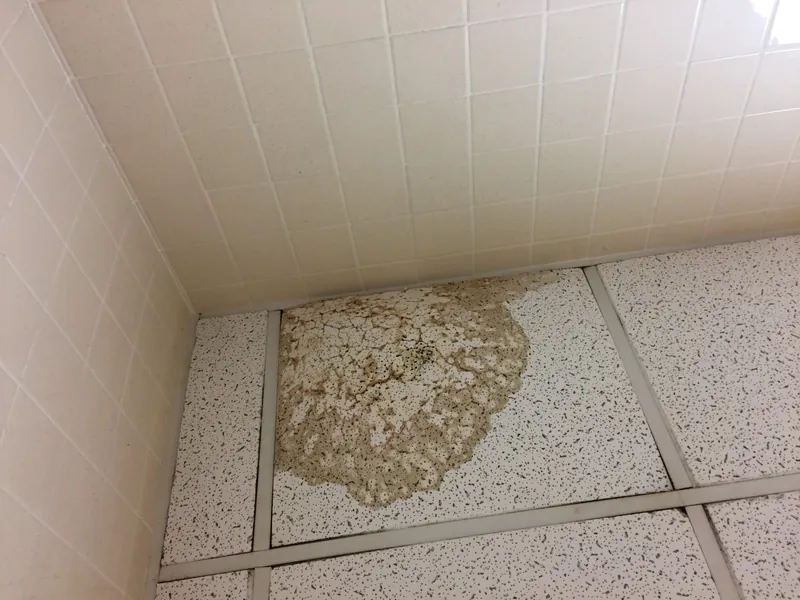
The short version
For AC leak water damage in Dallas, switch the system off, stop the water, and photograph the damage. A clogged condensate drain line is the usual cause, and an HVAC technician fixes it. A restoration provider dries wet insulation and drywall, ideally in the first 24 to 48 hours, per the EPA.
Why is my AC leaking water inside the house in Dallas?
Most of the time the cause is a blocked condensate drain line. As your AC cools the house it wrings water out of the air, and that water is meant to leave through a small pipe. When the pipe clogs, the pan under the coil fills and spills into the attic or the ceiling below.
Other causes exist: a cracked or rusted drain pan, a frozen evaporator coil that thaws and drips, a loose drain connection, or a unit that is not level. The cause decides who fixes it, and a restoration provider dries what got wet but does not repair the unit.
The page on water mitigation in Dallas explains where drying fits once the source is stopped.
What should I do first when the AC starts leaking?
Turn the AC off at the thermostat, then at the breaker if water is near the unit or dripping through a light. Stopping the cooling cycle stops new condensate, and every extra hour of running adds more water to a full pan. Once the system is off, deal with the water you already have.
- Shut the system off at the thermostat and the air handler switch.
- Cut the circuit for any room where water is coming through a light fixture or outlet.
- Catch and mop up what you can reach, and move belongings out of the drip path.
- Photograph the pan, the stain and the damage before cleanup.
- Check the air filter. A dirty one can contribute to a frozen coil.
- Call an HVAC technician for the unit, and a provider if material is wet.
Do not run the AC again until the drain line is cleared, or the pan will overflow a second time.
How does the condensate drain system work?
Warm indoor air passes over a cold coil, and water drips into a pan below it. A drain line carries that water outside, and a float switch on the pan or line is meant to shut the system off if the water backs up. When any piece fails, the water goes where gravity sends it.
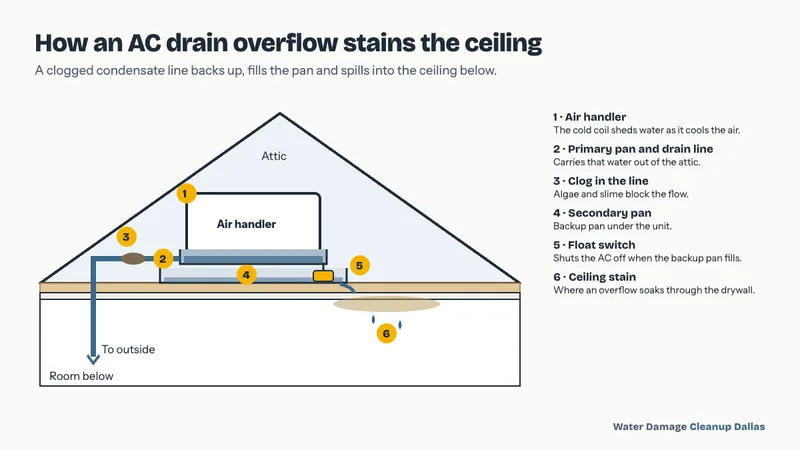
Air handlers in an attic are the setup most likely to damage a ceiling, because the pan sits right over the drywall. A unit in a garage or closet usually leaks onto a floor instead. Check where yours is, and note whether it has a secondary pan or a float switch.
Why do Dallas summers make AC leaks more common?
Hot weather keeps the system running long hours, and every hour produces condensate. Dallas gets plenty of heat. The NWS 1991 to 2020 normals for DFW Airport show a July mean of 85.7 F and an average of 20.2 days a year at 100 F or higher.
Humidity adds to the load. The same NWS normals list average relative humidity of 66 percent over the year, and 82 percent at 6 am. More moisture in the air means more water for the drain line to carry.
A drain that was only partly clogged in spring can quit in July. If the AC has been running hard and the ceiling or closet floor suddenly turns wet, start with the line. The restoration cost guide shows how fast a small leak can grow into a larger bill.
What does a clogged condensate line look like?
Look for water where it should not be: in the pan, around the air handler, or as a stain on a ceiling near a vent or hallway. A musty smell and a unit that shuts off on its own are other signs. The table pairs common signs with likely causes.
| What you see | Likely cause | First move |
|---|---|---|
| Water in the pan, not overflowing | Line is slow or partly blocked | Turn the unit off and call a technician |
| Ceiling stain near the air handler | Pan overflowed or cracked | Shut off power, then check the stain with a meter |
| Ice on the coil or lines | Airflow problem or low refrigerant | Switch to fan only to thaw it, then call a technician |
| Drip at the outdoor end of the line | Normal drainage | No action, unless it stops during a hot day |
| Wet closet floor or garage slab | Drain connection or pan failure | Dry the area and photograph it |
Can I clear a clogged AC drain line myself?
Some homeowners can, but it depends on access and comfort. The safe baseline is to turn the unit off first and read your air handler's manual. If the pan is in a hot attic, behind a ceiling opening or full of water, an HVAC technician is the better call.
Clearing the line only fixes the cause. It does not dry the insulation or ceiling the overflow already soaked. Wet attic insulation holds moisture against the drywall, so the area still needs drying and a moisture check.
Skip anything that involves chemicals you do not know. Never mix cleaning products, and the CDC specifically warns against mixing bleach with ammonia or other cleaners. When in doubt, hand the line to a technician and keep your attention on the wet material.
What happens to attic insulation and the ceiling after an overflow?
Overflow water soaks the insulation first, then wicks into the drywall and framing under the pan. Wet fiberglass tends to mat down and hold water against the ceiling, which keeps the drywall damp long after the pan is dry. That is why a stain can keep growing once the leak has stopped.
A provider checks with a moisture meter instead of by eye. Heavy or matted insulation is usually removed, while a lightly damp batt may be dried in place if the provider agrees. Ceiling drywall that sags or turns soft normally comes out, and firm board can often be dried from the attic side once the insulation is cleared.
Ask to see readings before and after drying. Keep them with your photos for the claim file.
Do I need an HVAC technician or a restoration provider?
You may need both, and the order depends on whether the unit is still leaking. An HVAC technician repairs the cause: the drain line, the pan, the switch or the coil. A restoration provider handles the water that already spread: wet insulation, ceiling drywall, flooring and the moisture behind them.
- Technician first when the unit is still leaking, so the damage stops growing.
- Provider next when drywall, insulation or flooring is wet or stained.
- Insurance photos go to the adjuster either way, so take them early.
This site connects callers with independent restoration providers, not HVAC contractors. Providers differ, so ask what they do and what they do not. Our ceiling water damage page covers the ceiling side in detail.
How fast can mold start after an AC leak?
Mold can start once damp material stays wet. The EPA's target is to get wet areas and belongings dry in the first 24 to 48 hours, with indoor humidity held below 60 percent and ideally 30 to 50 percent. Wet attic insulation and the back side of ceiling drywall are easy to miss.
A slow AC drip that runs for weeks is the harder case. By the time a stain shows, the material above it may have been damp a long while. Dark patches, a musty smell or a stain that keeps returning are signs to look further.
The EPA also notes that in most cases you can clean a moldy area smaller than about 10 square feet yourself. Bigger areas call for help, and the mold after water damage guide covers the steps.
Does homeowners insurance cover an AC leak in Texas?
It can. Standard forms list water that discharges or overflows from an air conditioning system, plumbing, heating or a household appliance among the covered perils, according to the Triple-I. Coverage for your own policy depends on its wording, so confirm with your agent.
- Policies do not cover damage caused by lack of maintenance, per the Triple-I. A slow leak from a long-neglected drain line may draw questions.
- Mold is often excluded, the NAIC says, so ask how your policy treats it.
- TDI's claim steps give the insurer 15 business days to acknowledge a claim.
The Triple-I advises protecting the home from more damage, saving receipts, and photographing before anything is thrown out. The insurance claims guide explains the sequence.
How can I prevent AC condensate leaks before summer?
Have the system checked before the heat arrives, and make sure the drain line, pan and float switch are in working order. Small habits help: change filters on schedule, and watch the pan and the ceiling below the air handler once the AC is running daily.
- Ask a technician to flush the drain line as part of a tune-up.
- Check that a float switch is installed on the pan or the line.
- Look at the pan for standing water, rust or cracks.
- Watch the ceiling below an attic unit for new stains.
The water damage prevention guide has a wider checklist for the whole house.
When should I call a restoration provider for an AC leak?
Call when the water reached drywall, insulation or flooring, when more than one room is wet, or when you cannot tell how far it spread. A provider takes moisture readings and dries what can be saved. The unit repair itself stays with the HVAC technician.
- Stop the leak by turning the AC off and having the drain line cleared.
- Tell the provider where the unit sits and how long the water ran.
- Ask for moisture readings before and after drying.
- Ask who handles the rebuild and what it costs.
- Read the paperwork before you sign. The work authorization guide lists what to look for.
Sources: NWS Fort Worth/Dallas, DFW Records and Normals; EPA mold and moisture brief guide; CDC mold and health; Triple-I covered disasters; Triple-I claims after a disaster; NAIC homeowners consumer page; TDI claim payment steps