The short version
A water damage work authorization is a contract. Read the scope of work, the price basis, any direction to pay insurance money, change order wording and waivers before you sign. Ask for a copy, strike what you do not accept, and keep a signed version with your photos and receipts.
What is a water damage work authorization?
A water damage work authorization is the form that lets a restoration provider start work in your house. It usually names the address, the scope of work, how the price is set and who pays. Signing it makes the document part of your agreement, so read it as a contract.
Titles vary. You may see it called a work order, a service agreement, a contract for services or an authorization to proceed. They all do the same job. The form often shows up at the door, while water is still on the floor and you are stressed, which is the worst moment to read fine print.
The people behind this site are a referral service and cannot see the form you were handed. It can tell you which parts to read first. Nothing here is legal advice, and a Texas attorney can explain your rights under a specific document.
Do I have to sign before the provider starts work?
Most providers want a signed form before they begin, because it records what you approved. That is reasonable. What matters is that you read it first, and that you can ask for changes in writing. Terms differ between providers, so confirm how yours works.
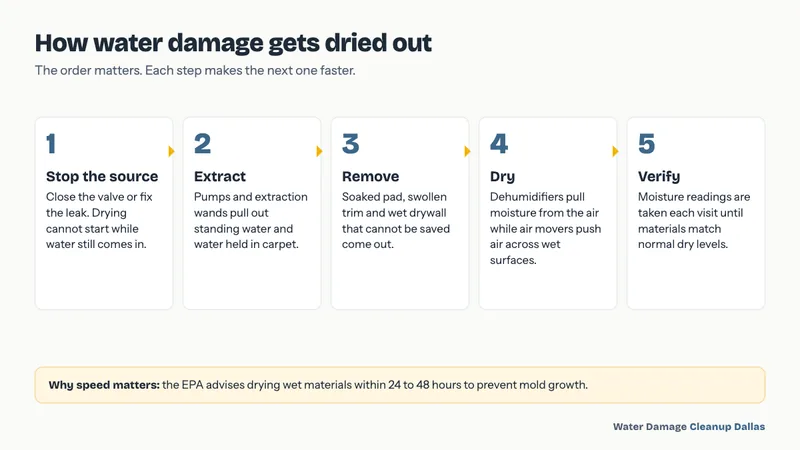
If water is still spreading, stopping the source and moving belongings out of the wet area do not need a signature. A plumber or the water shutoff can handle the source, and the water meter leak test page shows how to check for a hidden leak. The EPA puts the drying window at 24 to 48 hours, so there is some urgency, but not so much that you must sign an unread page.
A short pause to read is normal. Ask for a copy before you sign and take a photo of the signed version. If a provider will not let you read the form first, treat that as information about the provider.
Which clauses should I read first?
Read the scope, the price basis, the payment terms and any clause that gives up a right of yours. Those four decide most disputes. The table lists what to look for and what to ask, and it works for any provider.
| Clause | What to look for | What to ask |
|---|---|---|
| Scope of work | Rooms, tasks and materials named | Is anything beyond drying included? |
| Price basis | Unit prices, a fixed price or time and materials | What can raise the total? |
| Payment terms | Who pays, and when | What if my insurer pays less? |
| Direction to pay | Wording that sends insurance money to the provider | What rights am I passing on? |
| Change orders | How extra work gets approved | Is my written okay required? |
| Waivers and releases | Limits on liability or on going to court | Can I cross this out? |
Cross out or ask to change anything you do not accept, and initial the change. A form that comes back unchanged for every question deserves a second look.
What should the scope of work say?
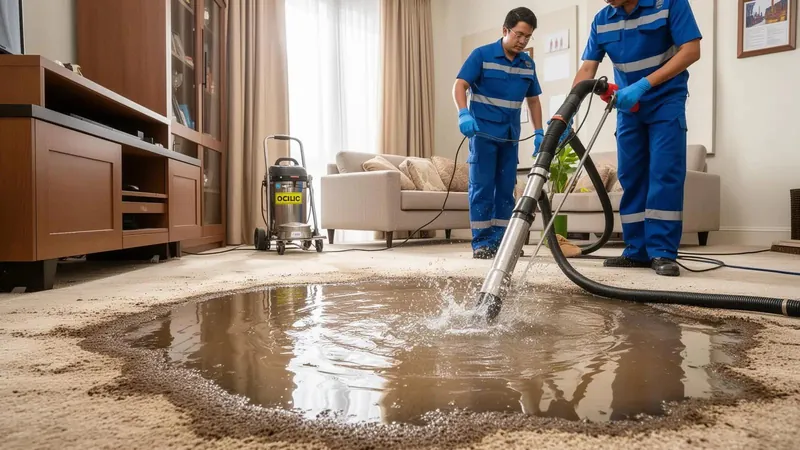
It should say what will be done, where and with what. A good scope lists each room, the tasks (extraction, removal of wet materials, drying, cleaning, monitoring) and what is left for a separate repair job. Vague wording such as "all necessary work" gives you nothing to hold anyone to.
Under the IICRC S500 standard the water category changes the work: clean, gray or grossly contaminated. Ask which category the provider assigned and why. A scope written for clean water does not fit a sewage backup or creek water in the house.
Also ask what is not included. Rebuilding drywall, paint and flooring is usually separate, and a quote for drying alone will look low next to one that includes the rebuild. The restoration cost guide explains why mitigation and repair come in separate parts.
What should the price section show?
It should show how the price is built, not just a total. Look for unit prices, quantities and the number of equipment days, or a clear fixed price with a stated scope. Triple-I suggests itemized written bids, and that bar fits a form you are about to sign too.
- Unit prices. A price per square foot or per unit per day lets you check the bill against the work.
- Equipment. The type and number of units, and how days are counted.
- Monitoring. Whether moisture readings are taken and given to you.
- Disposal and labor. Whether they are separate lines or already inside another one.
- Estimate or fixed price. Whether the number can change, and what triggers a change.
Providers differ in how they price, and none of this means one method is wrong. It means you should know which method you are signing. Read structural drying to see why equipment days and readings matter.
What is a direction to pay or assignment of benefits clause?
It is wording that tells your insurer to send some or all of the claim money to the provider, or that passes some of your claim rights to the provider. It can make paperwork easier. It can also change who controls the claim, so read it slowly.
Ask three things. Does the clause cover the whole claim or only the drying invoice? Do you still talk to your own adjuster? And what happens if the insurer pays less than the bill? Get the answers in writing. Do not assume the provider files your claim for you, because reporting the loss to your insurer remains your job.
Policies and insurer practices differ, and this page cannot say how your insurer will treat such a clause. Call your insurer or agent, describe the clause, and ask. The insurance claims guide covers what to say and what to keep.
Should I sign before my insurer has seen the damage?
You can, and you may need to, since protecting the property is part of a claim. Triple-I tells owners to call the agent or insurer immediately, protect the property sensibly, and wait on big permanent repairs until an adjuster has looked.
That points to a sensible split. Drying and removing wet material to stop further damage is protective work, while a full rebuild can wait for the adjuster. Photograph the damage first, since Triple-I also says to keep damaged items until the adjuster visits.
Make sure the form does not commit you to the full rebuild on day one. If it does, ask to sign a protective-work version first, and keep the rebuild for a separate agreement.
What happens when the job grows?
Jobs change once walls are opened, and a good form says how. A change order is a written approval of added work and its price. Without one, you may find charges on the final invoice that you never agreed to.
Look for wording that requires your approval, in writing, before extra work starts. Ask who can approve it if you are away, and how quickly you will get a price. Texting a photo of the new damage with a price attached works, as long as you keep the message.
The same habit helps with insurance. If the insurer's estimate and the provider's invoice differ, line-by-line change orders show where the scope grew. The guide to choosing a restoration company lists other questions to settle before work starts.
What do waivers and releases in the form mean?
They are clauses that limit what you can claim later or where a dispute is heard. Common examples are a cap on the provider's liability, a waiver of damage to contents, a requirement to settle disputes through arbitration, or a clause on who pays legal fees. Each one trades away a right.
You are allowed to ask what a clause means and to propose a change. Ask whether the form covers damage to belongings, since pack-out and cleaning of contents is its own job (see contents cleaning and pack-out). Ask whether the form mentions a lien on your property, and what it means in practice.
This page does not state what Texas law allows or forbids in these clauses, because it has not been verified here. If a clause looks large, a Texas attorney can read it, and the Texas Department of Insurance can answer general questions about claims at 800-252-3439.
What should I do before I sign?
Read the form once for scope and price, once for the clauses that take something from you, and once for what is missing. Then ask your questions in writing. The Triple-I advice to save receipts and keep photos applies from the start.
- Photograph the damage and the source before anything is moved.
- Ask for the form and read it in full, not just the signature page.
- Check the scope names your rooms and tasks, and that it separates drying from repair.
- Check the price basis and what could raise it.
- Read the direction to pay clause and ask what it changes about your claim.
- Strike or change what you do not accept, and initial it.
- Keep a signed copy and a photo of it, plus every message about changes.
Then tell your insurer you have started protective work. Texas Department of Insurance guidance requires a rejection to come with written reasons, and payment to follow within five business days of the insurer agreeing to pay. Keep your signed form with those records. More background sits in the water damage guides.
Sources: Triple-I claims page; IICRC S500; EPA moisture guide; TDI claim steps; TDI complaint page.