The short version
For wet carpet drying in Dallas, stop the water and start drying fast. Carpet wet with clean water can often be dried, but the pad usually cannot, and carpet touched by sewage or flood water comes out. EPA guidance sets a target of 24 to 48 hours for drying.
What should you do first when carpet gets wet in Dallas?
Stop the water, get weight off the carpet, and begin pulling moisture out in the first day or two. Wet carpet drying in Dallas goes best when the source is fixed early, because the pad and the floor under it stay wet long after the top feels dry.
- Stop the source. Close the fixture stop, the water heater inlet or the house shutoff, or call a plumber if a valve will not turn.
- Switch off power to the wet room from the panel, and only from a dry spot.
- Take photos and video of the carpet, the stain edges and the source before anything is moved.
- Lift off what you can. Small furniture, rugs and boxes come up; heavy pieces get foil or plastic under their legs.
- Soak up standing water with towels or a wet vacuum, and run the air conditioner if the system and ducts are dry.
- Call your insurer and a restoration provider. Describe the water source and how long the carpet has been wet.
Do not walk on soaked carpet more than you must, and keep electrical cords out of the wet area. Extraction is covered under water removal and extraction, which is the parent of this page.
Can wet carpet be saved?
Often, yes, when the water was clean and drying starts quickly. Carpet fibers tolerate water well, so the pad underneath and the water's source decide the outcome. Contaminated water, or clean water that has sat for days, usually means the carpet comes up.
| Situation | Carpet | Pad | Usual outcome |
|---|---|---|---|
| Clean supply line leak, found fast | Often saved | Sometimes dried, often replaced | Dry in place, then check readings |
| Washer or dishwasher overflow | Often saved after cleaning | Normally replaced | Clean the carpet, new pad |
| Clean water that sat for days | Doubtful | Replaced | Treated as contaminated |
| Sewage or outside flood water | Removed | Removed | Carpet and pad both go |
Treat the table as a rough guide, not a ruling on your carpet. A provider can check both layers with a moisture meter before anyone decides. The water-damaged floor repair page covers wood, laminate, vinyl and tile.
Why does the water source decide whether carpet stays?
Because porous materials soak up whatever is in the water. The IICRC S500 standard sorts water into clean, grey and grossly contaminated categories. Carpet that sat in clean water can be dried, while carpet that sat in sewage or outside flood water cannot be made safe and is removed.
Under that standard, a split supply line or pipe is Category 1. Washer or dishwasher discharge, or a toilet overflow with no waste, is Category 2. Sewage, and rising water from rivers, streams or outside surface water, is Category 3.
Clean water can also be downgraded if it sits long enough, which is why speed matters. For the worst cases, read sewage backup cleanup and flood cleanup. The EPA advises calling a professional experienced with contaminated-water damage when sewage is involved.
Does the carpet pad have to be replaced?
Usually, yes, or at least checked. Pad acts like a sponge, soaking up water and holding it against the floor where air cannot reach. When the carpet was wet with anything other than clean water, the pad is normally removed and thrown away.
With a fast, clean-water leak, a provider may lift a corner of the carpet, pull the pad and dry the slab, then put the carpet back over a new pad. The carpet itself can often go back down once the floor beneath is dry.
- Pad that feels spongy, smells musty or has stains coming up through the carpet should be replaced.
- A seam that has come apart, or a carpet that has lost its stretch, may need re-stretching or patching.
- Tack strips along the walls can hold water and may need replacing as well.
How is wet carpet dried?
A provider extracts the water first, then lifts or floats the carpet so air can reach the pad and the floor, and runs air movers and a dehumidifier until readings are normal. Pressing a towel into the carpet is not enough. The water that matters is in the pad and the slab.
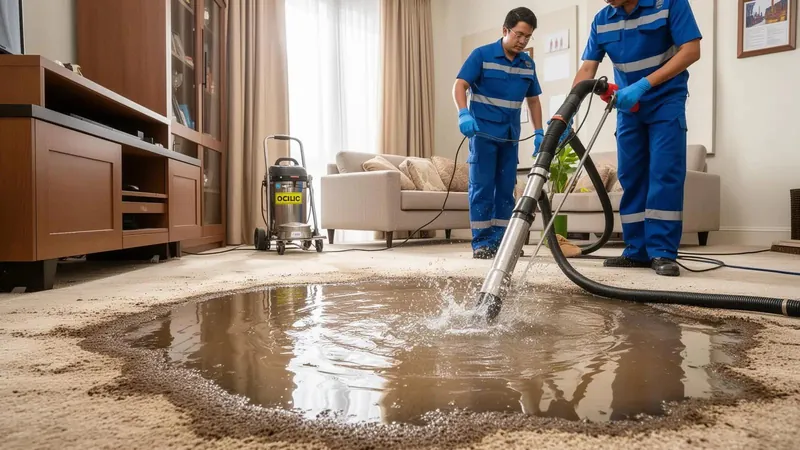
Two methods are common: floating the carpet on air so it dries in place, or pulling the pad and drying the floor before the carpet goes back. Providers choose by water category, so ask which one applies to you.
The drying step is covered in detail on the structural drying page, including how readings show the floor is done.
Can you dry wet carpet yourself?
For a small clean-water spill, yes: soak it up, add airflow and run a dehumidifier. For a soaked room, a household approach rarely reaches the pad or the slab, and carpet that feels dry on top can still be wet below.
- Use a wet vacuum on the carpet, passing slowly in both directions, until little water comes up.
- Put fans on the carpet and a dehumidifier in a closed room; leave the windows shut when the air outside is humid.
- Lift a corner at a wall and feel the pad. If it is wet or cold, the pad needs more than a fan.
- Do not run a space heater onto wet carpet, and keep cords out of any wet spot.
Never treat carpet touched by sewage or flood water as a do-it-yourself job. Wear boots and gloves, keep children and pets out, and see the emergency water damage page for the order of steps.
How long does wet carpet take to dry?
No fixed time applies. It depends on how much water the carpet and pad took in, the room's humidity, and how much air and dehumidification reach it. EPA mold guidance sets the goal of drying wet areas and items in the first 24 to 48 hours.
Dallas air adds a wrinkle. The National Weather Service gives DFW Airport a normal annual relative humidity of 66 percent, and 82 percent at 6 am on average. In humid weather, carpet in a closed room with a dehumidifier running will usually dry more reliably than carpet in a room with windows open.
Do not trust your hand. Ask for a meter reading on the carpet, the pad and the floor, and ask for a repeat reading a day or two later to confirm that it is falling.
Why does wet carpet smell, and is it mold?
A musty smell means something is still damp, and mold may be starting. Carpet and pad stay wet longer than most materials, and microbes grow in that dampness. The smell can show up well after the surface feels dry, which is why it often points to a wet pad or a wet slab.
Mold prevention, per the EPA, depends on drying wet areas and items in the first 24 to 48 hours. It also advises indoor humidity under 60 percent, ideally 30 to 50, and says not to paint or caulk over mold.
If the smell stays after the carpet has dried, lift a corner and check the pad and the tack strip. The water damage smell page helps trace odors, and mold after water damage explains what to do when growth shows. The EPA says most people can handle a moldy patch smaller than about 10 square feet themselves.
What if the carpet sits on a concrete slab?
Then the slab is part of the problem. Concrete holds water and gives it up slowly, so new carpet and pad laid over a slab that is still damp can trap moisture and bring back the odor. A provider should confirm the slab is dry before any replacement goes down.
If your carpet keeps getting wet with no spill or storm to explain it, the water may be coming from below. A supply line leaking under a slab can wet carpet from underneath. Warning signs include a hot patch on the floor, running-water noise with fixtures off and a sudden jump in the bill.
The slab leak page covers the signs, and the water meter leak test shows how to check for a hidden leak. Do not lay new carpet until the cause is found and fixed.
Which Dallas leaks soak carpet most often?
Air conditioner drain overflow, water heater failures, washer and dishwasher hoses, roof leaks after storms and burst pipes after a freeze are the common ones. Each wets carpet in a different way, and the source tells you which water category to expect.
- AC overflow: a clogged drain line fills the pan and drips through the ceiling, then onto carpet. See AC leak water damage.
- Water heater: a failed tank or fitting in a garage or closet floods the nearest rooms. See water heater leak.
- Appliance hoses: washers, dishwashers and fridge lines let go when you are away. See appliance leaks.
- Roof and hail: storm damage lets water through the ceiling. See roof leak water damage.
- Freezes: the NWS recorded 139 hours at or below freezing at DFW Airport in February 2021, and TDI says damage statewide included frozen pipes.
Pipes are most at risk in unheated areas like attics, garages and kitchen cabinets, according to the American Red Cross. The leak often shows when the pipe thaws.
How much does it cost to dry or replace wet carpet?
Cost depends on the area, the water type and whether the pad has to go. As a national reference, Fixr puts carpeting restoration at $4.75 to $10.50 per square foot, and water extraction at $3.75 to $4.25 for clean water, rising to $7 to $7.50 for black water. These are not Dallas quotes.
Bob Vila gives a range of $200 to $500 to restore floors, citing Angi and HomeAdvisor data. The gap between sources shows how much a small spill and a soaked room differ.
Ask for an itemized estimate that separates extraction, pad, carpet, drying and any slab work. Providers set their own prices, so compare written bids. The restoration cost guide explains the line items.
Does insurance cover wet carpet?
It depends on the cause. A standard policy names sudden discharge from plumbing, air conditioning or a household appliance, and NAIC says plumbing and roof leaks are typically covered. Outside flood water is excluded, and sewer backups are not covered by a typical homeowners policy or flood insurance.
Triple-I says policies exclude damage from poor maintenance, so a slow leak nobody noticed may be refused. It advises photos, saved receipts and keeping damaged items until the adjuster visits.
Ask the adjuster before you throw out the carpet. The insurance claims guide covers the Texas deadlines, and the loss of use page covers living costs if rooms are unusable.
What should you ask a provider about wet carpet?
Ask which water category they believe it is, whether the carpet and pad will be dried or removed, how they will confirm the floor beneath is dry, and what the estimate covers. Providers differ on all of this and this site cannot speak for them, so confirm directly.
- Will you take readings on the carpet, the pad and the slab, and share them?
- Will the carpet be lifted and re-stretched, and is that in the estimate?
- Is the pad being replaced, and what is the price per room?
- How will I know the slab is dry before new flooring goes in?
Before you sign anything, read the work authorization guide, and the guide to choosing a restoration company for more questions.
Sources: EPA mold and moisture brief guide; EPA mold cleanup guidance; IICRC S500 water categories; CDC mold and health; NWS Fort Worth/Dallas, DFW Records and Normals; NWS, February 2021 Historic Winter Storm; TDI, Winter Storm Uri losses report; American Red Cross, frozen pipes; Fixr cost ranges; Bob Vila cost guide; Triple-I coverage explainer; Triple-I claims advice; NAIC consumer page.