The short version
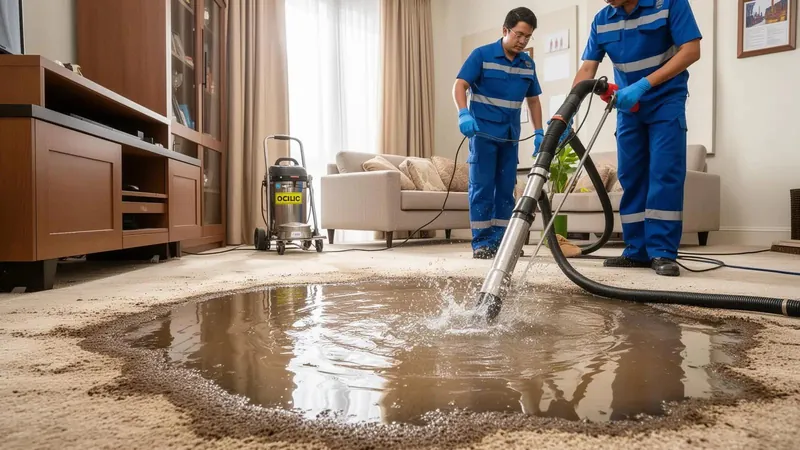
Water removal in Dallas starts after the source is shut off. A provider pumps standing water, extracts water from carpet and floors, checks moisture with a meter and plans the drying. The EPA advises drying wet areas within 24 to 48 hours. Prices and scope vary by provider, so confirm both directly.
What is water removal in Dallas, TX?
Water removal is the first physical job after a leak or flood: getting standing and absorbed water out of the house before it spreads into walls and flooring. People also call it water extraction or emergency water removal. It comes before drying, tear-out and repairs.
This site passes Dallas property owners along to independent restoration providers. It does no restoration work itself, and every provider decides its own scope, equipment and terms. Ask what a quote covers, because one company's "water removal" may stop at pumping while another's includes wet-material removal and drying.
Mold prevention is the reason for speed: the EPA says wet areas and belongings should be dry inside 24 to 48 hours, and extraction is what makes that window realistic. The emergency water damage restoration page covers the full first-call sequence. Stop the source first, because extraction cannot get ahead of a running leak.
How is water extraction different from drying?
Extraction removes liquid water, and drying removes the moisture left in materials. Extraction is fast and visible, since you can see the carpet go from soaked to damp. Drying takes longer and relies on air movement and dehumidifying, because wood, drywall and concrete hold water you cannot lift out.
| Stage | What it removes | Typical tools | What you can do |
|---|---|---|---|
| Extraction | Standing water and water sitting in carpet and pad | Pumps, wand tools, wet vacuums | Stop the source, move belongings, photograph |
| Tear-out | Materials that cannot dry in place | Hand tools, utility knives, saws | Keep samples and photos for the adjuster |
| Drying | Moisture held in framing, drywall and floors | Air movers, dehumidifiers, moisture meters | Keep the equipment running, keep doors closed |
| Repair | Nothing, it rebuilds what came out | Drywall, flooring and paint trades | Wait for dry readings and the adjuster |
Drying is its own job with its own readings, covered on the structural drying page. The table describes how the phases generally run; confirm which ones a given provider handles.
What happens during a water extraction visit?
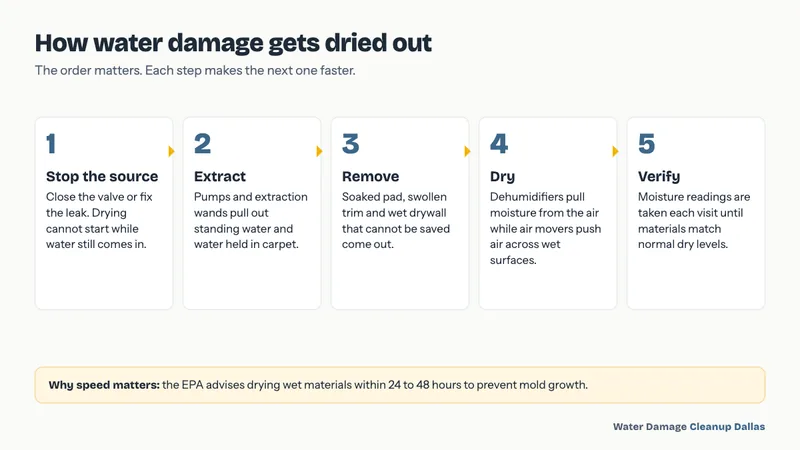
The provider checks safety, identifies the water type, then pumps or vacuums out the water and surveys what is still wet. The steps below are typical for a flooded room in a slab house, though the order shifts with the damage and the provider.
- Stop the source. Close the fixture valve or the house shutoff. The burst pipe page shows where the valves usually sit.
- Make the room safe. Power to wet areas is cut at the breaker, if the panel can be reached dry.
- Identify the water. Clean supply water, grey water and contaminated water get different handling.
- Pump the deep water. Anything more than a puddle usually goes to a pump first.
- Extract from surfaces. A wand tool pulls water out of carpet, and the pad is often lifted and checked.
- Survey with a meter. Readings on walls and floors show where moisture traveled past the visible edge.
- Plan the drying. What stays, what goes and which equipment gets set is decided from those readings.
Ask the provider to explain each step in plain words, and to tell you before anything is cut out.
What tools do providers use to remove standing water?
Standing water goes out with submersible pumps and truck-mounted or portable extractors, while smaller jobs use wet vacuums and wand tools. The tool depends on depth, the surface and whether the water carries mud or waste. Equipment choices are the provider's call.
A few terms show up in quotes and are worth knowing:
- Submersible pump: sits in deep water and pushes it out through a hose.
- Extraction wand: a flat head dragged over carpet or hard floor while a vacuum lifts the water.
- Moisture meter: a probe or pad that reads how wet a surface is. It does not remove water, but it guides where extraction continues.
- Air mover and dehumidifier: not extraction tools, but they take over once the liquid is gone.
Any visible water you can lift with a mop and towels is a job you can start while you wait, as long as the water is clean and the electrical hazard is handled. Larger amounts, anything spread under flooring, or anything contaminated is for a professional.
Can I rent a water extraction machine and do it myself?
For a small spill of clean water, yes. A wet vacuum from a hardware store can handle a wet bathroom floor or a few square feet of soaked rug. The limits are volume, contamination and what you cannot see: water under flooring and inside walls stays put.
People searching for a water extraction machine or a water extraction vacuum are usually after one of two things: speed or savings. A rented machine can deliver both on a small job. It cannot show how far moisture went, and that is what causes trouble later.
DIY is a poor fit when any of these apply:
- The water came from a sewer line, a toilet with waste, or outside flooding.
- Water reached drywall, insulation or the pad under carpet.
- The wet area covers more than one room.
- An adjuster needs documented drying for a claim.
Never plug a vacuum into an outlet near standing water, and never walk through water if the panel or an appliance may be energized.
Which kinds of water can be removed, and which need extra care?
Water type decides how it is removed and what happens to the materials it touched. The IICRC S500 standard sorts water into three categories: clean supply water, grey water and grossly contaminated water. Higher categories need protective gear and more tear-out.
| Category | Examples | How it is generally handled |
|---|---|---|
| 1, clean | Supply line, burst pipe | Extract, then dry most materials in place |
| 2, grey | Washer, dishwasher, toilet overflow without waste | Extract with care, remove porous materials such as carpet pad |
| 3, grossly contaminated | Sewage, floods rising from rivers and streams, runoff from outdoors | Professional handling, porous materials usually removed |
For sewage or any other contaminated water, the EPA recommends hiring someone with experience in buildings hit by it. Flood water has its own page at flood cleanup in Dallas, and sewage is covered in sewage backup cleanup. Water can also degrade as it sits, so a clean-water leak left for days is handled more cautiously.
Where does water come from in Dallas homes?
North Texas gets water indoors from storms, freezes, plumbing and equipment. The National Weather Service normals for DFW Airport show 37.01 inches of precipitation a year, 46.5 thunderstorm days on average and 10.9 days a year with an inch or more of rain. Each of those can mean a leak or a flooded floor.
Most North Texas houses sit on concrete slabs, so water usually spreads across a floor instead of draining down. It pools in the lowest room and wicks into the bottom of walls. Common sources include:
- Hail and wind-driven rain that open the roof or a window seal, covered at roof leak and storm water damage.
- Freeze breaks in attic and exterior-wall lines. The NWS recorded 139 consecutive hours at or below freezing at DFW Airport during the February 2021 storm.
- Slab leaks from supply lines under the floor, see slab leak water damage.
- Water heaters and AC drain lines in attics and garages.
- Street flooding in heavy downpours and creek overflow.
The source matters because it sets the water category, the insurance question and the plumber's job.
How much does water extraction cost in Dallas?
No Dallas-specific price list is verified for this page, so a firm Dallas number would be a guess. The national cost guide Fixr (updated January 31, 2025) lists extraction per square foot by water type: $3.75 to $4.25 for clean, $4.10 to $6.50 for grey and $7 to $7.50 for black.
Those rates rise with contamination, which fits how the work is done. For the whole job Fixr shows $1,200 to $5,000 nationally and an average near $3,000, which covers more than extraction. Treat all of these as national references only.
What changes a real quote:
- Square footage and depth of water.
- The water category.
- Whether furniture must be moved or contents packed out.
- Access to the wet areas, such as an attic or a crawl space.
- Whether drying equipment and tear-out are bundled in.
Providers set their own prices and a Dallas bid can land above or below the national numbers. Get the scope in writing, and see the water damage restoration cost page for how line items usually break down.
Does insurance pay for water removal?
Often, when the water came from a sudden plumbing or appliance failure, and rarely when it came from outside flooding. Triple-I notes that standard homeowners policies leave out flood damage, while a sudden spill from plumbing, a heating or cooling system or an appliance is a listed peril.
NAIC adds that leaks from plumbing or a roof are typically covered, but ground water and rain runoff are not. Policies also exclude damage from lack of maintenance, mold or pests, per Triple-I.
Triple-I's claims guidance gives the order: call your agent or insurer right away, and protect the property from further harm. Film the damage, keep receipts, and keep damaged items until the adjuster has seen them. Save major permanent repairs for after the assessment.
The Texas Department of Insurance lists claim deadlines in plain steps, summarized on the insurance claims page. Extraction itself usually counts as protecting the property, but ask your insurer before work starts.
What should I ask before water removal starts?
Ask for the scope in writing, the water type the provider has identified, and what comes out of the house. Read any work authorization before you sign, since it can bundle extraction with drying, tear-out and sometimes rebuilding. Confirm everything directly, because providers differ.
- Will the provider take moisture readings before and after extraction?
- Which materials are staying and which are coming out, and why?
- Does the quote include drying equipment, and for how long?
- Who handles contents, and is storage a separate charge?
- Will the provider work with your adjuster and share photos and logs?
The work authorization page explains what to read before you sign, and choosing a restoration company covers how to compare providers. Never sign a blank form or one with the scope left open.
What comes after the water is out?
Drying comes next, then repairs. Pulling the water out does not make a house dry, and walls and floors can stay wet inside for days. The CDC advises cleaning up and drying out fully and quickly after a flood, within 24 to 48 hours, and removing soaked carpets that cannot be dried right away.
A provider usually sets air movers and dehumidifiers, then returns to check readings. The EPA's target for indoor humidity is under 60 percent, with 30 to 50 percent ideal. Repairs wait until readings show the structure dry and, for a claim, until the adjuster has looked.
Carpet has its own page at wet carpet drying. If mold shows up later, the mold after water damage guide explains what to do. For the rebuild, see water damage repair in Dallas.
Sources: TDI, Getting your claim paid; Dallas Water Utilities, water main breaks and leaks; NWS Fort Worth, February 2021 Winter Event; NWS Fort Worth, DFW Records and Normals; CDC, About Mold and Your Health; NAIC, Homeowners Insurance; Triple-I, Settling claims; Triple-I, Which disasters are covered; Fixr, Water Damage Restoration Cost; IICRC, S500 standard; EPA, Mold Cleanup in Your Home; EPA, A Brief Guide to Mold, Moisture and Your Home.