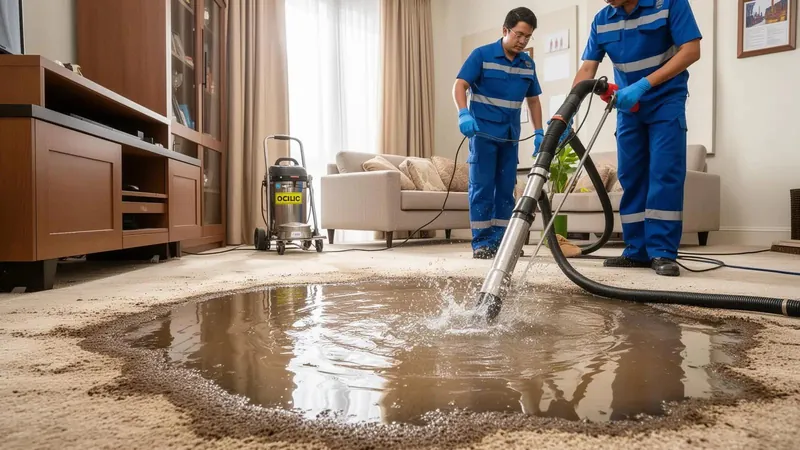
The short version
Emergency water damage restoration in Dallas starts with closing the main valve, staying clear of wet electrical items and photographing the damage. Then the water has to come out and the structure has to dry, ideally in the first 24 to 48 hours, before mold takes hold.
What counts as an emergency water damage situation in Dallas?
An emergency is any water event that is still adding water or has already soaked materials that will not dry on their own. Active pipe bursts, overflowing tanks, roof leaks during a storm, sewage in a drain and creek water at the door all qualify. A damp spot that has stopped growing is urgent, but it is not an emergency.
Ask two questions: is more water still arriving, and is it touching anything porous? If either answer is yes, speed matters. Per the EPA, wet areas and belongings should be dry again by the 24 to 48 hour mark if you want to keep mold from starting.
Emergency water damage restoration in Dallas usually begins with stopping the source and ends with a dry, repaired structure. This page covers the first stretch. The later stages have their own guides, starting with water removal and extraction and structural drying.
What should you do in the minutes before help arrives?
Stop the water, make the area safe and record what you see. Those three jobs cost nothing and change how the next few days go. Do them in this order, and skip any step that would send you wading toward wet outlets or a flooded panel.
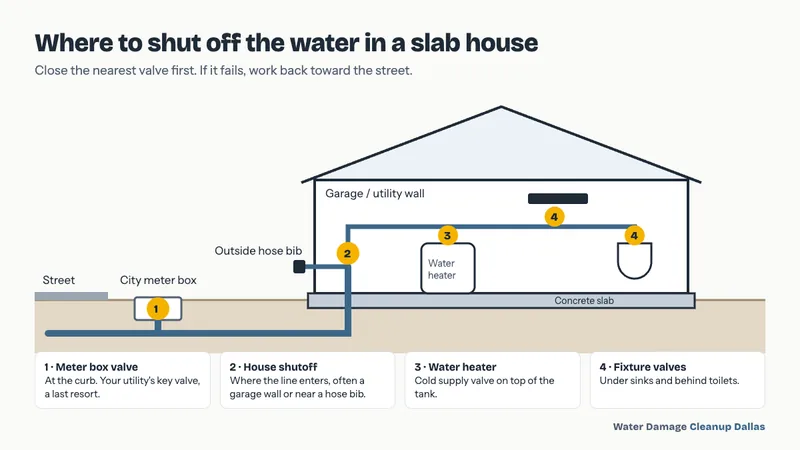
- Close the main valve. In a slab house it is often near the garage wall or in a utility closet. The curb meter box has a second valve if the house one is stuck.
- Cut power to the wet zone. Use the breaker only if you can reach the panel on dry floor. Otherwise leave and let the electric utility or an electrician handle it.
- Photograph the damage. Capture the source, the waterline and every wet room before moving anything.
- Lift valuables off the floor. Rugs, electronics and paper go to a dry room first.
- Phone your insurer. Ask how it wants emergency work documented, and write down the claim number.
A ceiling that bulges with water is a different hazard. The ceiling water damage guide shows how to relieve it safely.
Is it safe to stay in the house during a water emergency?
It depends on where the water is and what it touches. Clean water on a tile floor is a nuisance. Water around outlets, in a ceiling light fixture or near the panel is a shock risk, and anything from a sewer or a creek brings contamination that should keep children and pets out.
Ready.gov notes that six inches of fast-moving water can topple an adult and a single foot can float a car. Do not wade through moving water outside, and do not drive into a flooded street. If water is rising around the house, leave first and make the calls from higher ground.
Sewage and outside water fall into Category 3 under the IICRC S500 standard, the grossly contaminated class. The EPA's cleanup advice for sewage or other contaminated water is to hire someone with experience in buildings hit by it. The sewage exposure guide explains who should stay out of the house.
Which emergencies are most common in Dallas homes?
North Texas homes meet water emergencies from a handful of repeat causes: freeze bursts, hail and storm leaks, failed water heaters, clogged AC drain lines and sewer backups. The table matches each cause with its usual water category and the first move to make before anyone arrives.
| Cause | Typical category | First move | Guide |
|---|---|---|---|
| Burst or frozen pipe | Category 1, clean | Close the main valve, open a tap low in the house | Burst pipes |
| Water heater failure | Category 1, clean | Close the tank's cold supply valve and shut off power or gas to it | Water heater leaks |
| Dishwasher or washer overflow | Category 2, gray | Stop the appliance, close its supply stop | Appliance leaks |
| Sewer backup | Category 3, contaminated | Stop using drains, keep people out of the area | Sewage backup |
| Creek or street flooding | Category 3, contaminated | Stay out of moving water, call your flood insurer | Flood cleanup |
| Storm or roof leak | Varies with exposure | Catch drips, photograph, tarp only if you can do it safely | Roof leaks |
The categories come from the IICRC S500: Category 1 is clean supply water, Category 2 is gray water from appliances or an overflowing toilet without waste, and Category 3 includes sewage and rising water from rivers and streams.
Who should you call first: the city, a plumber, your insurer or a restoration provider?
Call whoever controls the source. A leak in the street is the city's problem. A leak inside the house is a plumber's problem. The insurer and the restoration provider come in alongside them. This site refers callers to independent providers and does none of the repair work itself.
- Dallas Water Utilities for a water main break or leak in the street. Dallas 311 takes those reports at 3-1-1, online or through the 311 app.
- A plumber for a failed pipe, valve or fixture inside or under the house.
- Your insurer to open the claim before any large repair begins.
- A restoration provider to remove water, dry the structure and document readings.
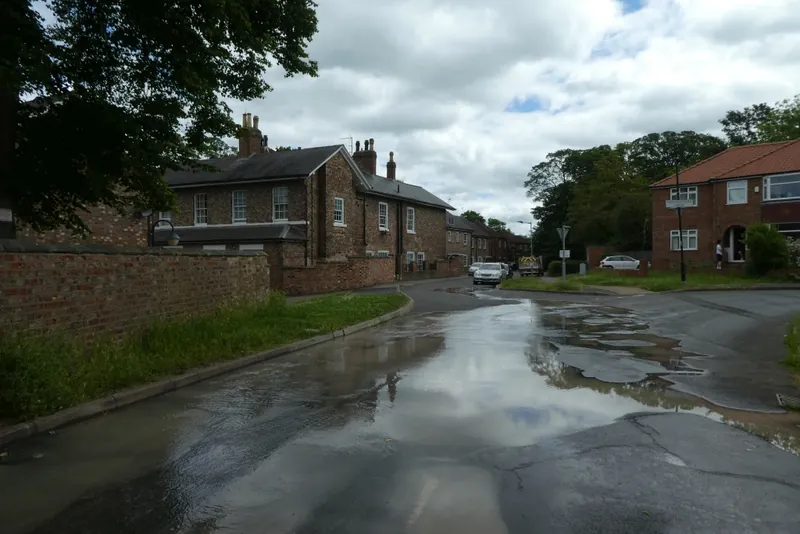

The water utility's own page says after-hours water emergencies go through its emergency services request. The page did not state who owns which stretch of pipe, so ask the utility where its responsibility ends and yours begins for your address.
What happens after the water is stopped?
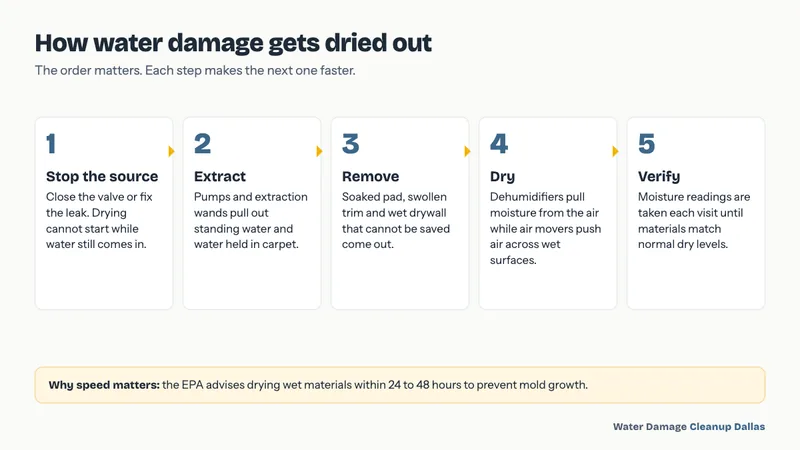
A provider who takes the job usually checks the area with a moisture meter, labels the water category, pulls out standing water and removes anything that cannot be dried. Equipment goes in next, followed by repeat visits to read the meters until each material tests dry.
- Inspection. The provider finds the source, maps the wet area and records readings.
- Extraction. Pumps and wands remove standing water from floors and carpet.
- Removal of wet materials. Soaked pad, insulation and the lower edge of drywall may come out.
- Drying. Air movers and dehumidifiers run, and the provider returns to take readings.
- Final check and repair. Once readings match dry areas, repairs can begin.
Providers differ in how they work and what they offer, so confirm each point directly. The water mitigation guide goes through the opening stage in detail.
How soon does an emergency job have to be dried?
Both the EPA and the CDC name 24 to 48 hours as the target. Past that point mold can settle into wet drywall, wood and carpet pad. Ordinary air drying rarely meets that target for soaked materials, which is why extraction and equipment start as early as possible.
Freezes add a second kind of emergency. When pipes thaw after a hard freeze, hidden splits start leaking all at once. The National Weather Service recorded 139 consecutive hours at or below freezing at DFW Airport in February 2021, and the Texas Department of Insurance counted 511,473 insurance claims statewide from that storm.
The CDC says flood-soaked carpet and upholstery that cannot be dried promptly should be removed. The mold guide covers what to look for in the weeks that follow, and the 2021 freeze guide covers the Dallas pipe story.
How do you document emergency damage for an insurance claim?
Take photos and video before cleanup, keep every receipt and hold off on permanent repairs until the adjuster has seen the damage. Triple-I advises protecting the property from further damage in the meantime, and keeping damaged items until the adjuster visits, so throw nothing away early.
- Wide and close photos of the source, waterline, floors and damaged items
- Receipts for emergency work, equipment and any hotel or meals
- The provider's drying logs, equipment list and moisture readings
- Written bids with materials and prices listed line by line
TDI's claim steps give your insurer 15 business days to acknowledge the claim, then another 15 business days after it has what it needs to accept or reject it. A rejection must come with a written reason. The company may extend by 45 days if it explains why, and TDI can add 15 more after a weather catastrophe. See the insurance claims guide for the full picture.
Flood is the exception. Per FEMA, flood losses fall outside most homeowners policies, and Triple-I adds that flood protection comes from a standalone NFIP policy or a few private carriers. Read your policy before the water arrives, not after.
What does emergency water damage restoration cost in Dallas?
No Dallas figure is available, and a provider sets its own price. On Fixr's national price guide (updated January 31, 2025), restoration jobs run $1,200 to $5,000 and average $3,000. Use that only as a rough check on an estimate, because it is not a quote for your house.
| Water type | Example source | Extraction per sq ft (Fixr) |
|---|---|---|
| Clean | Burst supply line | $3.75 to $4.25 |
| Gray | Washer or dishwasher | $4.10 to $6.50 |
| Black | Sewage or rising flood water | $7 to $7.50 |
For a sense of what insurers pay, the Insurance Information Institute reports average claim severity of $15,400 for water damage and freezing from 2019 to 2023. See the cost guide for how the pieces add up.
What should you ask a provider you reach in the middle of an emergency?
Ask the questions that protect you when you are under pressure: what the provider will do first, who will be on site, how readings are recorded and how the job is billed. Providers differ on availability and terms, so get each answer from the company itself, in writing if you can.
- What is the first thing you will do when you arrive?
- Which water category do you expect, and why?
- Will you record moisture readings at every visit and share them?
- How will the job be billed, and what do I owe if the claim is denied?
- Will anything be removed before my adjuster sees it?
The guide to choosing a restoration company has the longer list, and the work authorization guide covers what to read before you sign.
Sources: EPA brief guide on mold and moisture; EPA mold cleanup advice; CDC page on mold and health; Ready.gov flood safety; IICRC S500 standard; Dallas Water Utilities update on main breaks; Dallas Water Utilities home page; NWS summary of the February 2021 storm; Triple-I on settling claims; Triple-I on covered disasters; TDI claim payment steps; FEMA flood insurance FAQ; Fixr price guide; III homeowners claim statistics.