The short version
Water mitigation in Dallas, TX means stopping the source, removing standing water and wet materials, and drying the structure before repairs begin. EPA mold guidance puts the drying target at 24 to 48 hours, so the first two days matter most.
What is water mitigation in Dallas, TX?
Water mitigation is the first phase of a water damage job: stopping the source, removing the water and drying the building so the damage stops growing. In Dallas, TX it covers a split pipe in an attic, an overflowing AC pan or a hailstorm leak, and it comes before any rebuilding.
This website is a referral service and does no restoration work itself. Dallas-area property owners are put in touch with independent providers, and every provider decides its own scope, equipment and terms. The aim of this page is to explain the work so you can follow what a provider tells you.
The word "mitigation" also has an insurance meaning. Policies expect you to take reasonable steps to keep damage from spreading, and mitigation is how that gets done in practice. The water damage glossary defines the other terms you will hear.
How is water mitigation different from water damage restoration?
Mitigation limits the damage and restoration puts the property back. Mitigation is urgent and short: water out, wet materials out, building dry. Restoration is the rebuilding afterward: new drywall, flooring, trim and paint.
| Question | Mitigation | Restoration |
|---|---|---|
| Goal | Stop the spread of damage | Return the home to its prior condition |
| Typical work | Extraction, tear-out of soaked material, drying, monitoring | Drywall, insulation, flooring, paint, trim |
| Timing | As soon as the water is found | After the structure reads dry |
| Paperwork | Photos, moisture readings, equipment log | Itemized repair estimate |
Ask whether a provider is quoting mitigation only or the whole repair. The water damage repair page covers the second half.
What happens in the first 24 to 48 hours of mitigation?
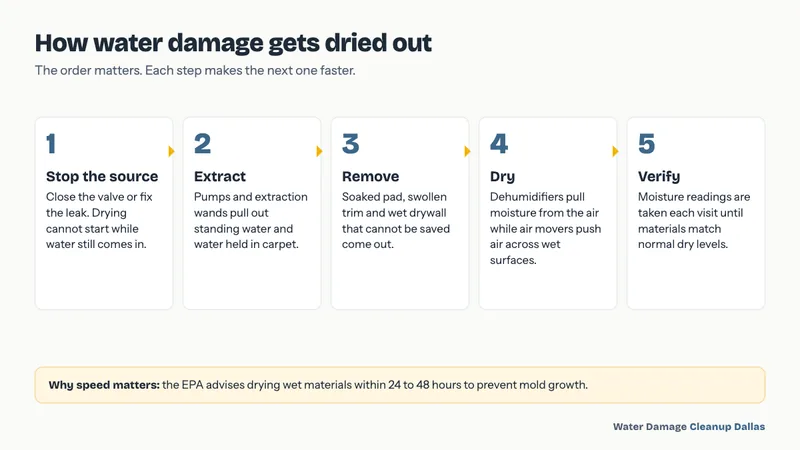
The first two days decide how far the damage spreads. Mold prevention guidance from the EPA sets a target of 24 to 48 hours for drying anything the water touched. Mitigation is organized around that window: stop the source, pull out standing water, remove what cannot dry, then set drying equipment.
- Stop the water. Close a fixture stop or the house shutoff, or have a plumber repair the line.
- Make the area safe. Power to wet rooms goes off, and anyone with doubts about wiring waits for an electrician.
- Document the loss. Photos and video of the water, the source and each damaged item come before anything moves.
- Extract standing water. Pumps and wet vacuums take off what is on the floor. See water removal and extraction.
- Remove what cannot be dried. Soaked pad, insulation and low drywall are common examples.
- Set equipment and take readings. Air movers and dehumidifiers go in, and moisture readings are written down.
If you cannot reach anyone yet, the emergency water damage page lists what to do in the first hour.
How do providers decide what to dry and what to remove?
They start with the water category. The IICRC S500 standard sorts water into three categories, and the category tells a provider whether a material can be dried in place or has to come out. Clean water is the most forgiving, and contaminated water is the least.
| IICRC category | Example from a Dallas home | Usual effect on materials |
|---|---|---|
| 1, clean | Supply line or pipe that split in the attic | Many materials can be dried in place |
| 2, grey | Dishwasher or washer discharge, a toilet overflow with no waste | Pad and soft goods tend to come out |
| 3, grossly contaminated | Sewage, or rising water from a creek, river or street | Porous materials the water touched are removed |
Water can move up a category as it sits, which is one more reason speed matters. For sewage and outside water, read sewage backup cleanup and flood cleanup. The EPA advises calling a professional experienced with contaminated-water damage when sewage or other contaminated water was involved.
What equipment does a mitigation job use?
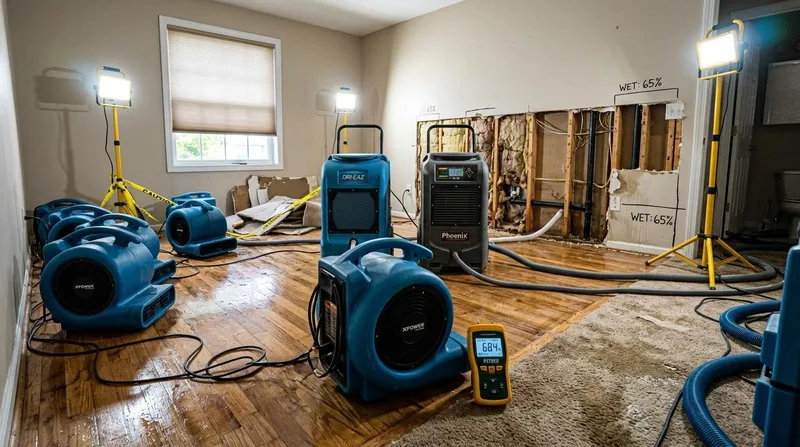
Most jobs use pumps or extractors for standing water, air movers to push air across wet surfaces, and dehumidifiers to pull moisture out of the air. Moisture meters then show whether framing, drywall and subfloor have dried. A job may also use specialty drying panels for floors.
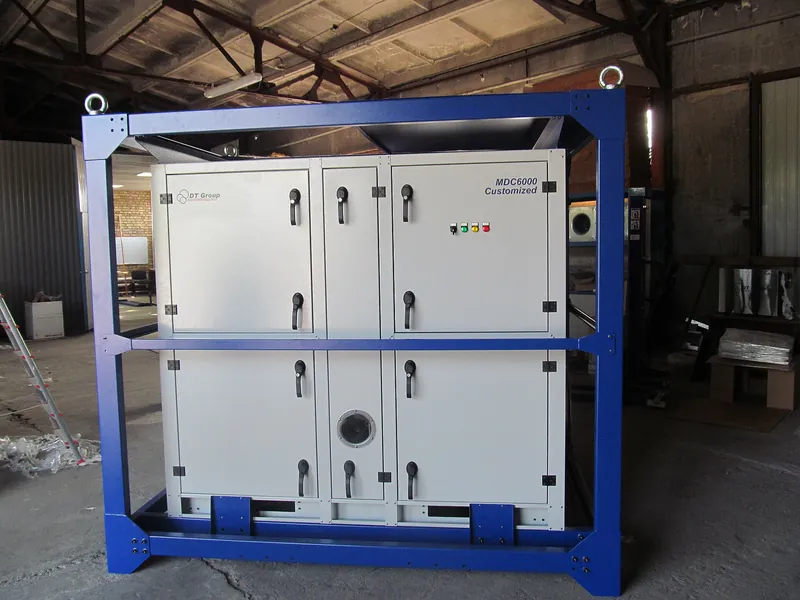

Air movers alone only dry a surface. Without a dehumidifier the water they lift goes back into the air and settles on other materials. That is why a box fan from the hardware store rarely finishes the job.
The structural drying page goes through how long equipment stays and how readings are used.
Why do Dallas weather and humidity matter during drying?
Because the air that has to take up the moisture is not always dry. The National Weather Service reports a normal annual relative humidity of 66 percent at DFW Airport, and an average of 82 percent at 6 am. For the indoor side, the EPA wants humidity held under 60 percent, and 30 to 50 percent if you can manage it.
Opening windows to dry a room can bring in humid air instead. A closed house with dehumidifiers and air conditioning running is usually easier to control, so ask the provider how they plan to manage humidity.
NWS data also shows the Dallas pattern of wet spells. Normal rainfall is 4.78 inches in May and 4.37 inches in October, the two wettest months in the 1991 to 2020 normals, and DFW averages 10.9 days a year with 1.00 inch of rain or more. Those are the weeks leaking roofs and low yards bring in calls.
Which Dallas events lead to mitigation calls?
Hail, heavy thunderstorms, hard freezes and ordinary plumbing failures account for most of them. North Texas has a long record of each, and each one puts water inside a building in a different way, so the first steps differ from one cause to the next.
- Hail and storms: the NWS says a supercell on April 11, 2016 hit Wylie, where 80 percent of homes were affected and damage topped $300 million. See hail storm roof leaks and roof leak water damage.
- Hard freezes: the NWS records 139 consecutive hours at or below freezing at DFW Airport in February 2021. TDI reported 511,473 insurance claims statewide from that storm, with damage that included frozen pipes. See winter storm 2021 pipe damage.
- Flash flooding: the NWS reports rainfall rates near 2.25 inches in 15 minutes over Dallas County in the May 1995 Mayfest storm. See the flood zone map guide.
- Plumbing and AC: a split supply line, a clogged AC drain or an attic water heater can wet a ceiling with no storm at all.
Dallas Water Utilities adds one more cause. In its September 10, 2026 update it reports that crews repaired 310 main line breaks and leaks over the previous three months and names dry expansive soil as a contributor to breaks.
What can you do yourself before help arrives?
Stop the water, protect people and belongings, and document everything. These steps cost nothing and do not get in the way of a provider. Skip anything that involves tearing out walls or ceilings, since that is easier to do right with readings and the right gear.
- Lift small items, rugs and electronics off wet floors, and put foil under furniture legs on wet carpet.
- Turn on the air conditioning if the system and ducts stayed dry, and leave windows shut when the air outside is humid.
- Take photos and video before anything is moved or thrown out.
- Hold on to damaged items until your adjuster has seen them; Triple-I gives the same advice.
Never use a wet vacuum near standing water if you are unsure about the wiring, and do not step into water that may touch an outlet. If water came through a ceiling, the ceiling repair page shows how to relieve a bulge safely.
Does insurance pay for water mitigation?
Often, when the loss is covered. Triple-I lists sudden leaks and overflows from plumbing, heating, cooling systems and household appliances among the perils a standard policy names. NAIC likewise calls plumbing and roof-leak damage typically covered. Neglected maintenance is not, and outside flood water needs its own policy.
Triple-I tells policyholders to protect the property from more harm with reasonable steps, but to wait on big permanent repairs until an adjuster has looked. Keep receipts for what you spend.
The Texas Department of Insurance sets two clocks: 15 business days for the company to confirm it has your claim, then 15 business days from receiving what it needs to decide. A company can stretch the second clock by 45 days if it gives a reason, and TDI can add 15 after a weather catastrophe. The insurance claims guide walks through the steps.
How much does water mitigation cost in Dallas?
No Dallas price list exists on this site, and providers set their own prices. For national context, Fixr puts water damage restoration between $1,200 and $5,000, averaging $3,000. Treat that as a ballpark, not a quote for a Dallas address.
Fixr also breaks extraction down per square foot by water type, from $3.75 to $4.25 for clean water up to $7 to $7.50 for black water, with gray water between at $4.10 to $6.50. Dirtier water costs more because more has to be removed and cleaned.
Get an itemized written estimate that separates extraction, equipment, tear-out and monitoring. Triple-I suggests written bids that list materials and prices line by line. More on how bills are built is in the restoration cost guide.
What should you ask a water mitigation provider?
Ask what category of water they believe it is, what will be removed and why, what equipment will run, and how they will show the structure is dry. Providers differ on all of this and this site cannot speak for any of them, so confirm directly before you agree to work.
- Will you take moisture readings on day one and at each visit, and give me a copy?
- What do you expect to remove, and what will you try to dry in place?
- Is the estimate itemized, and what could change it?
- Who talks to my insurer, and what happens if the insurer pays less?
Read what you are signing first. The work authorization guide and the guide to choosing a restoration company go through the common clauses. Mold is a separate question, covered under mold after water damage.
Sources: EPA mold and moisture brief guide; EPA mold cleanup guidance; IICRC S500 water categories; NWS Fort Worth/Dallas, DFW Records and Normals; NWS, April 11, 2016 Hail Storm; NWS, February 2021 Historic Winter Storm; NWS, The Mayfest Storm; TDI, Winter Storm Uri losses report; TDI, Getting your claim paid; Dallas Water Utilities, water main breaks and leaks; Triple-I coverage explainer; Triple-I claims advice; NAIC consumer page; Fixr cost ranges.