The short version
Contents cleaning and pack-out in Dallas means moving belongings out of wet rooms, cleaning what can be saved and listing what cannot. Photograph everything first, keep damaged items until the adjuster visits, and ask any provider how it packs, tracks and stores your things. Providers differ, so confirm directly.
What is contents cleaning and pack-out in Dallas after water damage?
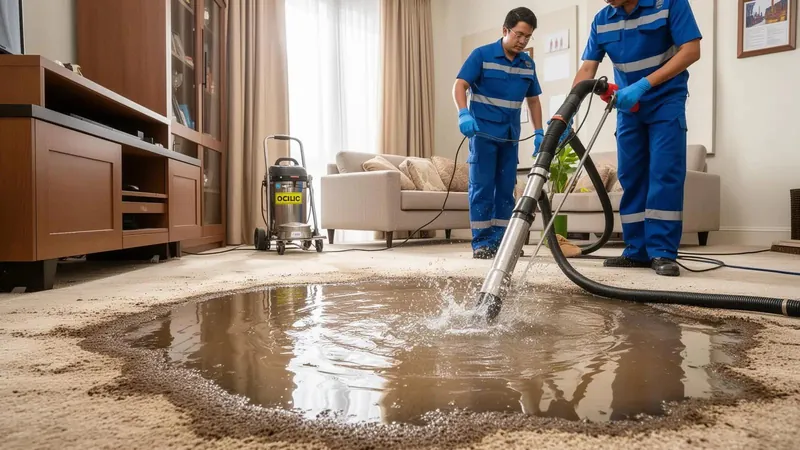
Contents cleaning and pack-out in Dallas means moving belongings out of a wet home, cleaning what can be saved and listing what cannot. Contents are everything that is not part of the building itself: furniture, clothing, books, electronics, dishes. A pack-out clears the rooms so floors and walls can be dried.
Most North Texas houses are built on slabs, so water from a leaking supply line or a roof leak tends to spread across the floor and reach furniture legs, bottom shelves and boxes first. Hail can open a roof, and a hard freeze can split a pipe in the attic or an exterior wall. After the February 2021 freeze, the Texas Department of Insurance counted 511,473 claims statewide, so a lot of Texans have dealt with wet belongings.
Water Damage Cleanup Dallas does no restoration work itself. It puts callers in touch with independent providers, and each one treats belongings in its own way, so ask before you count on any service.
Which belongings can usually be saved, and which usually cannot?
It depends on what the item is made of and what kind of water touched it. Smooth, hard items tend to clean up well, while soft, porous items tend to hold water and whatever is in it. The table is a general guide only, and the water type matters more than any row.
| Belonging | Often handled by | Why it matters |
|---|---|---|
| Solid wood, metal and plastic furniture | Cleaning and drying | Smooth surfaces wash well, but wood can warp if it stays damp |
| Sofas, mattresses and rugs | Drying, or disposal after dirty water | Padding and fabric hold water deep inside |
| Clothing and linens | Laundering | Fabric from sewage or flood water is a different case |
| Books, papers and photos | Fast drying, or a specialist | Paper and ink break down quickly when wet |
| Electronics and small appliances | A repair technician | Plugging in a wet device can ruin it or cause a shock |
| Dishes and cookware | Washing and sanitizing | Hard glazed items clean up better than wooden or porous ones |
The water-damaged floor guide covers the flooring under all of this, and the wet carpet page covers rugs and wall-to-wall carpet.
How does a pack-out work from the first walk-through to the return?
A pack-out follows a fixed order: look, list, pack, move, clean, store and return. The point is that every box can be traced from your living room to the cleaning room and back. Ask the provider you are connected with how it handles each step, because methods and paperwork differ.
- Walk-through. Someone looks at each room with you and marks what is wet, what is dry and what is in doubt.
- Inventory. Items get a description and a number, ideally with a photo, before anything leaves the house.
- Packing and labeling. Boxes are marked by room so they can go back where they came from.
- Moving out. Belongings go to a cleaning area or storage, which clears the floor for extraction and drying.
- Cleaning. Items are cleaned by type: wiping, washing, drying, or a specialist for delicate things.
- Storage until repairs finish. Contents wait somewhere dry while the structure is dried and rebuilt.
- Pack-back. Items return room by room once the repairs are done.
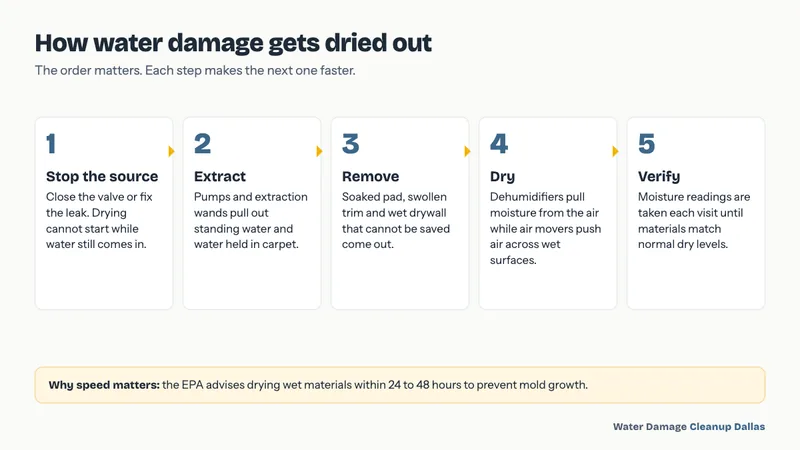
The structural drying page explains what happens in the emptied rooms.
What should I do with my belongings before anyone arrives?
Stop the water first, keep people safe, then move only what you can lift without risk. Do not throw anything out yet. Triple-I advises holding on to damaged items until the adjuster has visited, and the order below protects both your belongings and your claim.
- Shut off the water at the source or the main. The emergency steps page shows where to look.
- Stay out of wet areas if electrical outlets or cords are involved, and call an electrician if the panel is wet.
- Photograph and video every wet room before you move a thing.
- Lift small items onto dry counters, beds or shelving, if it is safe to do so.
- Pull out wet rugs and cushions only if you can do it without carrying standing water through the house.
- Set aside valuables, papers and medications in a dry spot away from the work area.
- Call your insurer and then a restoration provider.
Keep a separate pile for anything you think is ruined. Label the pile instead of discarding it.
Which belongings are usually thrown away after a sewage or flood loss?
Belongings that touched Category 3 water, which includes sewage and rising flood water, are the hardest to save. IICRC's S500 standard names Category 3 as grossly contaminated, with sewage and flood water from rivers and streams as examples. Soft, porous items that soaked it up are the usual losses.
After a flood, the CDC wants the house dried and cleaned fast, inside 24 to 48 hours, and soaked carpets and upholstery that will not dry quickly taken out. Its mix for hard surfaces is household cleaner, or soap and water, or at most 1 cup of bleach per gallon of water. Bleach should never meet ammonia or another cleaner.
Where sewage is involved, the EPA points you to a professional who knows buildings hit by contaminated water. The sewage backup page and the sewage exposure health page explain why. Photograph an item before you discard it, and ask your insurer what it needs to see.
How do I list my belongings for an insurance claim?
Make an inventory of damaged items with a description, an approximate purchase date and what it would cost to replace or repair. Triple-I recommends giving a copy to the adjuster with any receipts. Work room by room, so nothing gets missed, and keep your own copy.
A phone makes this easier. Take a short video of each room and talk through what you see, then photograph labels, serial numbers and any damage up close. If records were lost, Triple-I says to work from memory.
- Item and room. Write what it is and where it was.
- Age and cost. Estimate when you bought it and what a replacement would cost.
- Condition. Note wet, stained, warped, moldy or working.
- Where it went. Mark whether it was packed out, discarded or left in place.
The insurance claims guide covers the rest of the paperwork. Ask your provider for its own item list too, and compare the two.
Does insurance pay for contents cleaning and storage in Texas?
Often it pays for part of it, but your policy wording decides. Triple-I lists accidental water discharge from plumbing, heating, cooling systems and household appliances among the perils on standard forms. Ask your agent whether cleaning, packing and storage are included, and up to what amount.
Several points from Triple-I and others apply to many Texas policies.
- Flood is excluded. Standard homeowners and renters policies leave out flood damage, which needs separate flood cover. FEMA says most homeowners insurance does not cover flooding.
- Sewer backup is separate. A typical homeowners policy does not pay for it. It is usually added as an endorsement or a separate product.
- Two checks are common. When a home and its contents are both damaged, Triple-I says you generally get one check for the building and one for the contents.
- Replacement cost or actual cash value. One pays to replace an item without subtracting for age, and the other subtracts depreciation.
A flood policy through the NFIP provides up to $250,000 for the structure and $100,000 for personal possessions, according to Triple-I. On timing, TDI gives an insurer 15 business days, counted from when it has what it needs from you, to say yes or no. Read loss of use coverage for the hotel and meal side.
Why does humidity matter for stored belongings in North Texas?
Damp belongings can grow mold, and stored boxes are easy to forget. The EPA wants wet items dry in 24 to 48 hours and indoor humidity held under 60 percent, with 30 to 50 percent as the ideal. North Texas air is not always dry, so storage conditions deserve a question.
The National Weather Service lists normal relative humidity at DFW Airport at 66 percent for the year and 82 percent at 6 am on average. That is outdoor air, not the inside of a storage unit, but it shows why a damp box left in a garage or an unconditioned unit can go bad.
Ask where your belongings will be kept, whether the space is climate-controlled and how items are dried before they are boxed. The EPA also warns against painting or caulking over mold. The mold after water damage guide goes deeper.
What should I ask a provider about pack-out before I sign?
Ask who will do the pack-out, where the belongings will go, how items are tracked and what it will cost to store them. Providers differ, and some may use partners for part of the work. Get the answers in writing, and read the authorization form before you sign.
- Who packs, cleans and stores? Is it one company, or several?
- How are items tracked? Ask for the inventory format and whether you receive a copy.
- Where is storage? Ask about the conditions and whether you can visit.
- What is billed, and how? Ask for itemized pricing, since this page cannot quote what any provider charges.
- What happens to items it cannot clean? Ask how it will document them so your insurer can see them.
- Who handles delicate items? Art, instruments, documents and electronics may need a specialist.
The work authorization guide explains the form, and choosing a restoration company offers more questions. Triple-I also advises getting written bids with line-by-line prices, and warns against contractors who ask for a large amount up front.
Sources: EPA guide to mold and moisture; EPA mold cleanup advice; CDC mold and health page; IICRC S500; Triple-I claims after a disaster; Triple-I disaster coverage table; FEMA flood insurance FAQ; TDI claim payment steps; TDI winter storm losses report; NWS DFW climate normals.