The short version
Slab leak water damage in Dallas starts with a broken water line under the concrete. Typical clues are a warm patch underfoot, a hiss in a quiet house, a bigger bill and a meter dial that creeps while all taps are closed. Close the main valve, get a plumber to locate the break, and arrange drying of the wet floors and walls.
How do I know if I have a slab leak in my Dallas house?
Look for a warm patch on the floor, the sound of running water when every tap is off, a water bill that jumped, or damp flooring with no obvious source. One sign alone proves little. Two or three together are a strong reason to test the meter and call a plumber.

Most North Texas houses are built on a concrete slab, so many of the supply lines run through or under it. A leak there cannot be seen, which is why the first clues are usually a sound, a smell or a number on a bill.
- A floor spot that feels warm underfoot, which can point to a hot water line.
- A hissing or rushing sound in a quiet house at night.
- Baseboards, carpet or laminate that stay damp, buckle or smell musty.
- Cracks or wet stains at the bottom of a wall.
- Low water pressure at several fixtures at once.
Our signs of water damage guide lists the visible clues that show up above the floor, including ones that have nothing to do with a slab.
Can the water meter show a slab leak?
Yes. Stop all indoor and outdoor water use, note the meter, leave the house alone for two hours, and compare. The EPA's test treats any change as a probable leak. A dial that has moved means water went somewhere on the property.
The test does not say where the water is escaping. It could be a slab line, a toilet flapper, a hose bib or an irrigation line. Close the main house valve and watch the meter again: if it still moves, the leak is between the meter and the house.
The full routine is on our water meter leak test page. The EPA adds a bill check: a family of four above 12,000 gallons in a winter month, January or February for example, may be losing water to serious leaks.
What are the first steps when a slab leak is suspected?
Shut the water off at the main valve, keep people and pets off wet floors, and call a plumber. A slab leak is a plumbing failure, so the pipe has to be found and fixed before drying can last. Photos of every wet spot come next.
- Close the main house shutoff or the valve at the meter box. See the diagram below for where each valve sits.
- Turn off the water heater power or gas if you will leave the supply off for a while, so the tank is not heated while it drains.
- Photograph the floors, walls and the meter, including the dial reading and the time.
- Move rugs, boxes and furniture off wet flooring.
- Call a plumber who does leak detection, and tell them what the meter did.
- Call a restoration provider to dry the floors and walls while the repair is arranged.
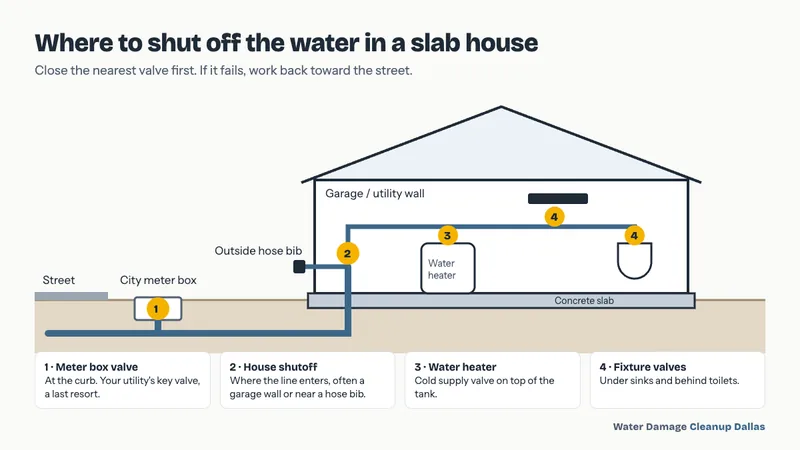
If the leak is in the street or at the meter box itself, Dallas Water Utilities says to report leaks by calling 3-1-1, through Dallas 311 online or in the Dallas 311 app.
Which trade handles which part of a slab leak?
A plumber finds and repairs the leaking pipe. A restoration provider removes the water and dries the floors, walls and slab. These are separate trades, and this site is a referral service, so it connects you with restoration providers and does not repair pipes.
| Job | Who does it | What to ask | When it happens |
|---|---|---|---|
| Confirm and locate the leak | Plumber with leak detection tools | How the spot was pinned down, and whether the finding is in writing | First |
| Repair or reroute the line | Plumber | Whether the fix is a spot repair or a new route, and why | After the leak is located |
| Extract water, remove wet materials | Restoration provider | What will be removed and how it will be documented | As soon as the supply is off |
| Dry floors, walls and slab | Restoration provider | Which readings show the job is finished | Alongside or after the plumbing fix |
| Rebuild flooring and drywall | Contractor | A written bid with materials listed line by line | After the materials read dry |
Providers differ in what they offer, so confirm the scope with whoever you are connected with. The emergency water damage restoration page explains the first stage of a job.
Should a leaking slab line be patched in one spot or rerouted?
It depends on the pipe, the number of leaks and what the plumber finds. A spot repair opens the slab over one leak. A reroute abandons the buried line and runs new pipe through walls or the attic. Ask the plumber to explain why one fits your house.
A single leak in an otherwise sound line is often a spot repair candidate. Several leaks, or a pipe that is worn along its length, can point toward a reroute. Neither choice is right for every house, and the right answer comes from the inspection.
- Ask what material the line is made of and how old it is.
- Ask whether other sections look worn or only the leaking one.
- Ask how much of the floor will be opened and who patches it.
- Ask for the price and scope in writing before work starts.
Ask each bidder to itemize materials and prices, as Triple-I recommends for claims. Plumbing and flooring bids are separate from drying work, so file them separately.
How does a slab leak ruin flooring and drywall?
Water from a slab leak soaks flooring from below, wicks into the bottom of walls and can loosen glue. Carpet and pad hold moisture, laminate and hardwood can swell or cup, and drywall near the floor absorbs water upward. The damage can spread before any stain shows.
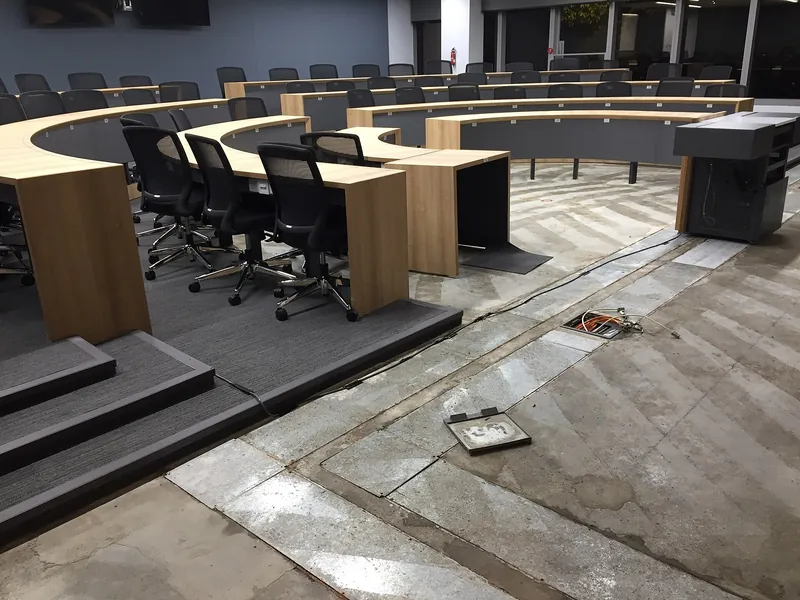

Under a slab, the water follows the path of least resistance, so it may come up at a doorway, a wall base or an expansion joint far from the break. That is why the wet spot and the leak are often in different places.
The water-damaged floor repair page covers wood, laminate, tile and carpet, and the drywall water damage repair page covers the walls.
How long does it take to dry a slab after a leak?
There is no standard number of days. The answer depends on how much water got in, how thick the slab is and what flooring sits on top. A job is done when readings match a dry reference at each spot, not when a calendar date arrives.
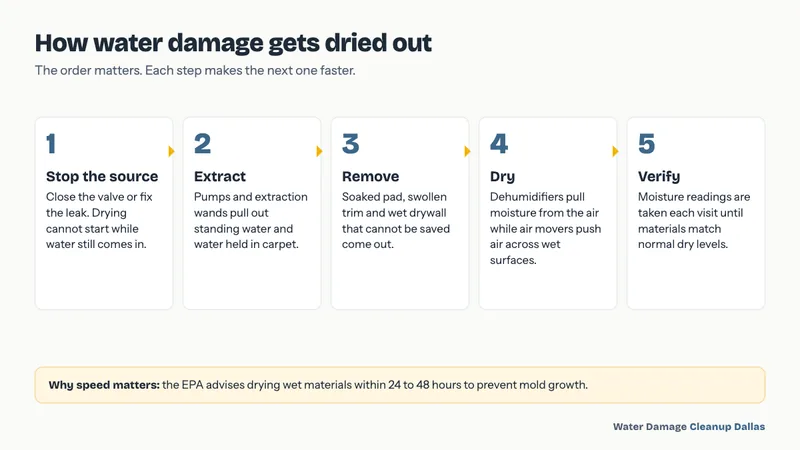
- Stop the source. The plumber fixes the pipe.
- Extract standing water and lift wet carpet and pad.
- Remove materials that cannot be saved, such as swollen baseboard or soaked drywall at the floor.
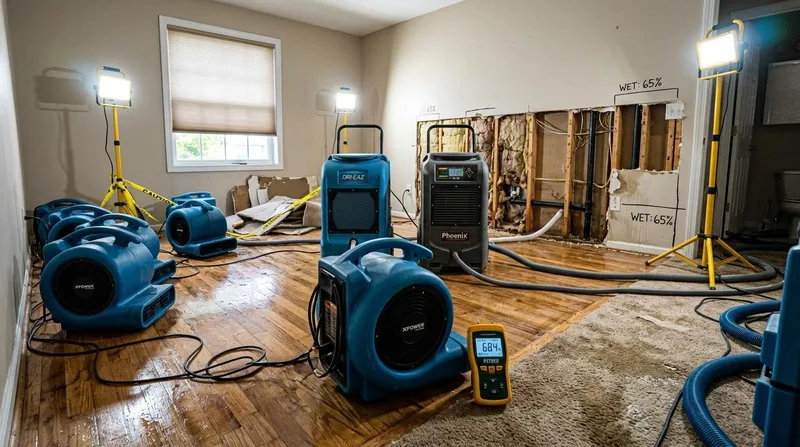
- Dry with air movers and dehumidifiers and take readings at each visit.
- Confirm dry readings before flooring goes back down.
Concrete holds moisture for a long time. Ask the provider how it will check the slab and the flooring, and see the structural drying page for how readings guide the work.
Will mold form under the flooring?
Yes, when materials stay wet. The EPA's guidance is to get wet areas and belongings dry in the first 24 to 48 hours so mold does not start. Slab leaks are often found late, so inspect the back of baseboards, the carpet edge and the lower wall for dark spots or a musty smell.


For soaked carpet and upholstery that cannot be dried promptly, the CDC recommends throwing them out. It wants the whole home dried out and cleaned fast. The EPA warns against painting or caulking over mold.
On humidity, the EPA puts the ceiling at 60 percent and calls 30 to 50 percent the target band. Read mold after water damage for what to do if the growth is already visible.
Will my homeowners policy pay for a slab leak?
It may pay for the resulting water damage, but the failed pipe itself and neglect-related damage are commonly left out. Triple-I lists accidental discharge or overflow from plumbing among the perils on standard forms, and it notes that poor upkeep is not covered.
The NAIC describes plumbing-related water damage as typically covered. A slow hidden leak raises a sudden-versus-gradual question, so tell your insurer what you found and when, and ask how the policy treats it. Whether the cost of reaching the pipe through the slab is paid varies by policy.
For scale, Triple-I's statistics put water damage or freezing claims at about one in 60 insured homes in a year, with an average claim of $15,400 across 2019 to 2023. Your own outcome depends on the policy and the cause.
Phone the insurer before any permanent repair, take photos and save receipts. The water damage insurance claims guide walks through the steps. Under the Texas Department of Insurance timeline, a company has 15 business days to acknowledge a claim, then 15 more business days after it has what it needs to say yes or no.
What does slab leak cleanup cost in Dallas?
This site has no verified Dallas price for slab leak repair, so it gives none. For the drying and cleanup side, national averages exist, but your cost depends on the area wet, the materials and the provider. Get written estimates and compare the scope, not only the total.
Fixr's national figures put a typical restoration bill between $1,200 and $5,000, with a $3,000 national average. Fixr also lists restoration at $4.75 to $10.50 per square foot for carpeting and $10 to $15 for hardwood. Treat these as national reference points, not a Dallas quote.
The plumbing fix is billed separately from the drying and the flooring. See the restoration cost guide for how estimates are built, and ask each provider what is included before you agree to anything.
How can I spot a slab leak before it floods the floors?
Read the water meter on a schedule, watch the bill for jumps, and notice warm floor spots or new sounds. A leak caught early costs less to open, dry and repair than one that runs for weeks under flooring.
- Read the meter before you leave on a trip and again on return, with water off. A moved dial deserves a closer look.
- Compare each bill with the same month of the previous year.
- Walk the floors now and then and note any warm or damp patch.
- Check the usual leak points first, including the water heater and the AC drain line, before blaming the slab.
- Know where the main shutoff is and make sure the valve turns.
The prevention guide adds a longer checklist. Dallas Water Utilities names dry expansive soil as one contributor to water main breaks, a reminder that ground movement stresses buried pipes, though that note is about city mains and not house lines. The burst pipe page covers failures you can see.
Sources: EPA WaterSense, Fix a Leak Week; EPA, A Brief Guide to Mold, Moisture and Your Home; EPA, Mold Cleanup in Your Home; CDC, About Mold and Your Health; Triple-I, Which disasters are covered by homeowners insurance; Triple-I, Settling insurance claims after a disaster; Triple-I, Facts and Statistics: Homeowners and renters insurance; NAIC, Homeowners Insurance; TDI, steps to getting your insurance claim paid; Fixr, Water Damage Restoration Cost; Dallas Water Utilities, water main breaks and leaks (City News Hub).