The short version
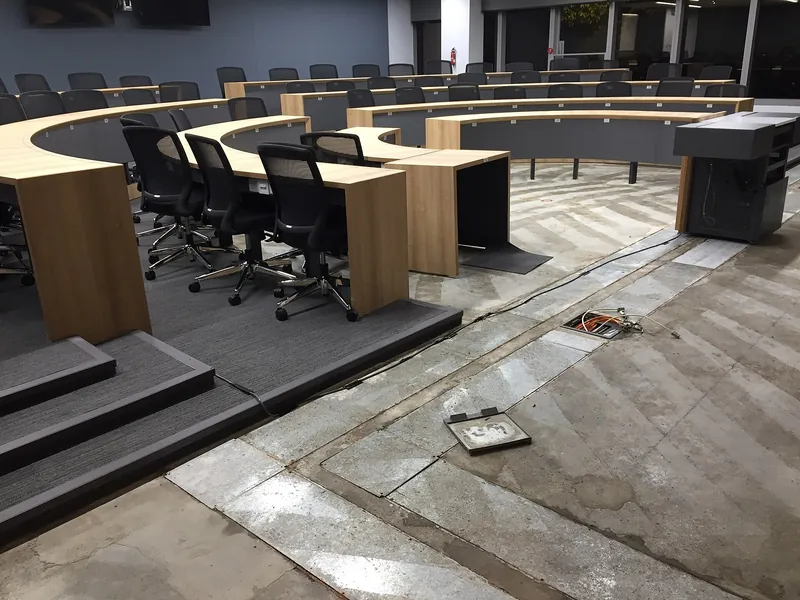
Water damaged floor repair in Dallas depends on the floor type and the water source. Floors dried quickly after clean water can often be saved, while buckled wood, swollen laminate and anything soaked by flood water are usually replaced. Stop the source, photograph the damage and do not sand until the floor is dry.
What should you do first when a floor gets wet in Dallas?
Stop the source, get the water off the floor and take photos before anything is moved. A wet floor is a race against warping and mold, so the first day matters most. Work out whether the water came from a supply line, a roof, an appliance or the ground.
- Stop the source: shut the house water valve for a pipe, switch off the leaking appliance or have the roof covered.
- Cut power to wet areas if outlets or cords are in the water, and only from a dry spot.
- Photograph and film the floor, the water line on walls and any damaged items.
- Mop or soak up standing water and lift rugs, furniture and boxes off the floor.
- Open the room to airflow with fans and, if the air is dry, open windows.
- Call your insurer, then request a restoration provider if the water spread or soaked in.
The emergency water damage restoration page explains what a provider does next. The rebuild side lives in the water damage repair guide.
Can a water-damaged floor be saved?
Often yes, if the water was clean and the floor dries fast. Each floor type reacts differently, and the water category matters. The IICRC S500 puts clean supply-line water in Category 1, and rising flood water or outside surface water in Category 3.
The table gives a rough picture for a floor that got wet from a broken supply line. A moisture meter and an inspection of the subfloor settle each case.
| Floor type | How it reacts to water | Often saved when | Often replaced when |
|---|---|---|---|
| Solid hardwood | Absorbs water, cups, then may crown or buckle | Dried fast, before boards lift | Buckled, or wet for a long time |
| Engineered wood | Layers can separate and edges swell | Only a small area got wet | Layers delaminate |
| Laminate | Fiberboard core swells at the seams | Rarely, if wet briefly | Edges swell or planks lift |
| Vinyl plank or sheet | Surface resists water, seams let it under | Water is lifted before it soaks under | Water sits beneath and floor lifts |
| Tile | Tile resists water, grout and backer do not | Base stays sound and dry | Tiles loosen or crack |
| Carpet and pad | Holds water in the pad | Clean water, dried fast | Pad is soaked, or water was Category 3 |
For carpet, the wet carpet drying guide goes into more detail. The CDC says to remove carpets and upholstery that were soaked after a flood and cannot be dried right away.
Why do wood floors cup, buckle and warp after water?
Wood absorbs moisture and swells, and the swelling is uneven. Cupping is when the edges of a board rise higher than the center, usually because moisture came from below. Buckling is more severe, when boards lift away from the subfloor, and warped boards often will not lie flat again.
Moisture can arrive from the top, as in a spill, or from below, as with a leak or damp slab. That is why the first look is never just the surface.
- Cupping: board edges rise, often after slow or repeated moisture from below.
- Crowning: the center of a board rises, sometimes after a cupped floor is sanded too soon.
- Buckling: boards push up off the subfloor, a sign of heavy or long exposure.
- Gaps and staining: shrinkage after drying, or dark marks from trapped water.
Do not sand or refinish a floor until it is dry throughout. Refinishing over damp wood traps moisture and can make the problem worse. Ask the provider for floor moisture readings and a plan before any sanding.
How are wet floors dried?
Air movers, dehumidifiers and sometimes floor-drying mats pull moisture out of the surface and the layers below. The aim is to dry the floor in place, without lifting it, when that is possible. Providers use moisture meters to track progress, then stop when the readings match a dry reference.
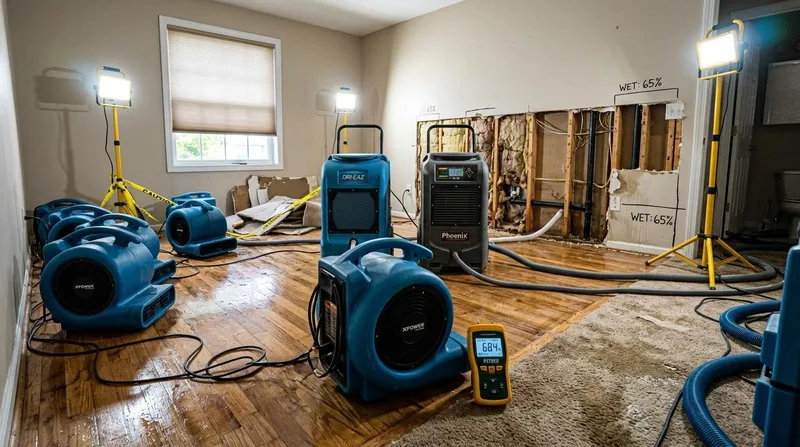
The EPA's drying target is 24 to 48 hours, with indoor humidity held under 60 percent and ideally in the 30 to 50 percent range. Industrial equipment is much stronger than a household fan and keeps the air dry enough for water to leave the wood.
Sometimes a few boards are removed to let air into the cavity beneath, and sometimes baseboards come off so walls can dry as well. Providers differ in methods and equipment, so ask what will be used and how long readings will be taken. The structural drying guide covers the process, and the water removal guide describes the extraction before it.
What about the subfloor and the slab under a wet floor?
The layer under the finished floor decides how far the damage goes. Most North Texas homes sit on concrete slabs, so many wet floors sit directly on concrete and a thin underlayment. Upstairs rooms and homes with a raised floor have a wood subfloor and joists that can soak too.
A slab does not rot, but it holds moisture and can feed it back into flooring above. Wood subfloors, sheathing and joists can stay damp after the surface looks dry. They need readings, because a swollen or soft subfloor panel is normally replaced.
If you suspect a leak under the slab, look for a warm spot, the sound of running water or a high water bill. The slab leak guide explains the warning signs, and the water meter leak test guide shows how to check whether water is moving when fixtures are off.

When is a floor replaced instead of repaired?
When it cannot be dried flat, when the water was contaminated, or when the repair costs more than new flooring. Buckled hardwood, swollen laminate and delaminated engineered wood rarely return to normal. Category 3 water changes the answer for any porous floor.
The IICRC S500 defines Category 3 as grossly contaminated, including sewage, rising flood water and outside surface water. The EPA points to a professional with experience in contaminated-water damage. Porous materials touched by it are generally removed.
Replacement of one area can mean a color or finish mismatch with the rest of the room. Ask the contractor how new boards will blend and whether the whole room needs refinishing. Triple-I recommends itemized written bids, and it says damaged items should stay put until the adjuster comes, so photograph a sample before anything is thrown out.
The flood cleanup guide and the sewage backup guide show how those jobs differ.
What does floor water damage repair cost, and does insurance pay?
Costs vary by floor type, the area and how many layers got wet, and this site does not quote provider prices. For national scale, Fixr shows hardwood at $10 to $15 per square foot and carpeting at $4.75 to $10.50, and Bob Vila's figure for floor restoration is $200 to $500. These are national guides, not Dallas bids.
Coverage turns on the source of the water. In the NAIC's description, plumbing and roof leaks are usually covered, while ground water and runoff are not. Triple-I adds that standard forms name sudden water discharge from plumbing, cooling systems and appliances.
Flood and sewer backup are the gaps. Per FEMA, most homeowners policies leave flooding out. Sewer backup falls through a different gap: Triple-I says neither a typical homeowners policy nor flood insurance covers it, so it needs its own endorsement.
Under the Texas Department of Insurance timeline, a decision is due 15 business days after the company has its documents, and payment is due five business days after it agrees. Read the insurance claims guide and the restoration cost guide for more.
Why do floors get wet in Dallas homes?
Leaks from above, from the side and from below all reach the floor. Hail and thunderstorms open roofs. The NWS normals for DFW Airport show an average of 46.5 days a year with thunderstorms, and Texas ranked first with 902 major hail events in 2025, per Triple-I.
Plumbing and appliances come next. Water heaters in attics or garages, washer hoses, dishwashers and refrigerator lines can all leak onto flooring. Attic air handlers add a summer leak, since a clogged condensate line can overflow and drip through the ceiling onto the floor below.
Cold weather adds burst pipes. The NWS says DFW Airport spent 139 consecutive hours at or below freezing in February 2021, and the Red Cross names attics, garages and kitchen cabinets as the places supply pipes face the most risk. Flash flooding and a blocked street drain can push water in at ground level.
The appliance leak guide, the water heater leak guide and the winter storm 2021 guide cover each source.
Does mold grow under a wet floor?
It can, if the floor and the layers below stay damp. Mold feeds on wet wood, paper-backed underlayment and carpet pad, often where nobody can see it. A musty smell with no visible cause is a hint, and the spot may be under the flooring.
To keep mold from starting, the EPA wants wet areas and items dry in 24 to 48 hours, and it warns against painting or caulking moldy surfaces. For a moldy patch under about 10 square feet, it says most people can handle the cleanup themselves. The CDC says people with asthma or mold allergy may react severely.
Texas sets its own rules for mold work. The Texas Department of Licensing and Regulation says visible mold under 25 contiguous square feet can in most instances be cleaned by unlicensed people. Larger jobs or hidden growth deserve a professional look.
The mold after water damage guide sorts what you can handle from what you cannot, and the water damage smell guide helps trace a musty odor.
Who do you call for a water-damaged floor?
A plumber or roofer for the source, a restoration provider for drying, and a flooring contractor for the rebuild. One company may do more than one of those, so ask each what it handles. This site is a referral service for water damage and does not install flooring.
Request a provider as soon as water has soaked in. Then ask whether the company dries floors in place, how readings are taken and who does the replacement if boards must go. Providers differ, and nothing on this page means a given company offers any of these services.
- Ask what moisture readings the provider will share, and how many visits are expected.
- Get drying and replacement priced as separate lines, in writing.
- Keep photos of the floor before, during and after the work.
- Check the work authorization guide before you sign.
The guide to choosing a restoration company has the full call list. If water has reached your floors, reach out through this site and we will pass your request to an independent restoration provider that takes requests for your area.
Sources: NWS Fort Worth DFW normals; Triple-I hail statistics; NWS Fort Worth on the February 2021 storm; Red Cross frozen pipes page; IICRC S500 water categories; CDC page on mold and health; EPA brief guide to mold and moisture; EPA guidance on cleaning up mold; TDLR mold FAQ; TDI claim payment steps; NAIC homeowners insurance page; FEMA flood insurance FAQ; Triple-I on settling claims; Triple-I on covered disasters; Fixr restoration cost guide; Bob Vila restoration cost article.