The short version
A water heater leak in Dallas starts with a closed cold supply valve and the electric breaker or gas control turned off. Photograph the damage, then bring in a plumber for the tank and a drying provider for the structure. A tank in the attic can soak a ceiling, so begin drying in the first 24 to 48 hours.
What do I do right after my water heater starts leaking?
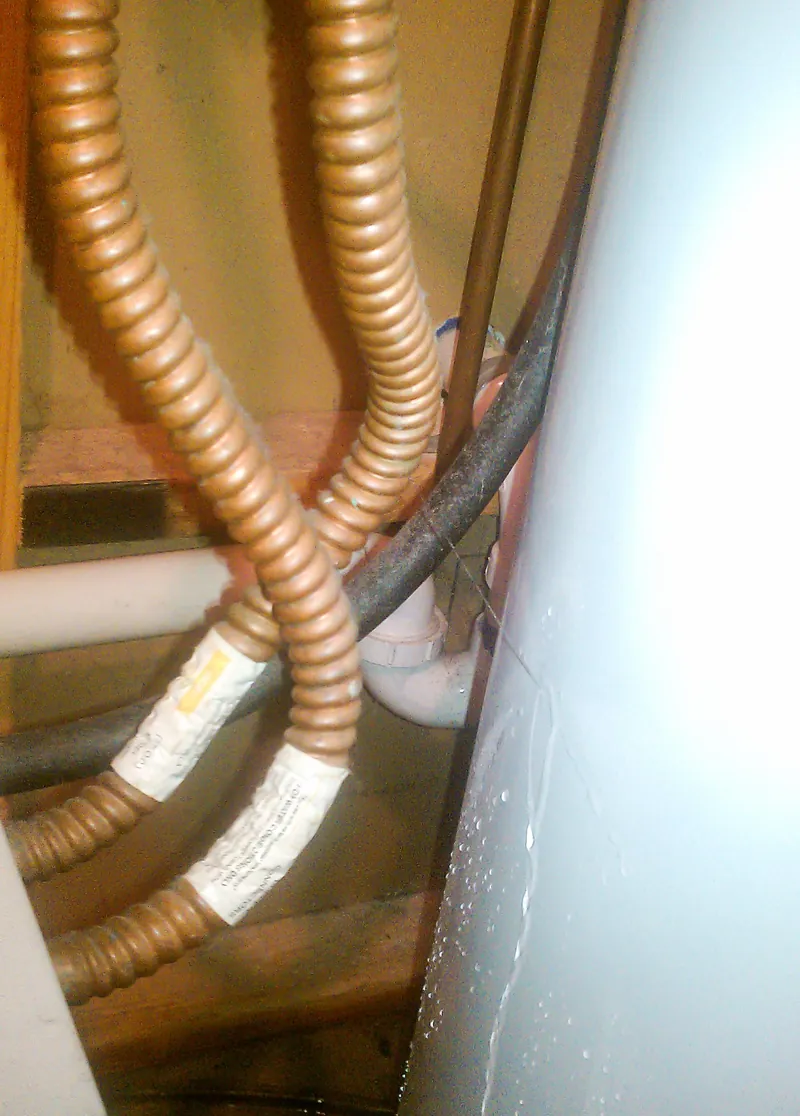
Stop the water feeding the tank, cut the power or gas, and keep clear of wet floors and ladders. In many Dallas homes the tank sits in an attic or garage, so check the footing and the nearby outlets before you reach for any valve or switch.
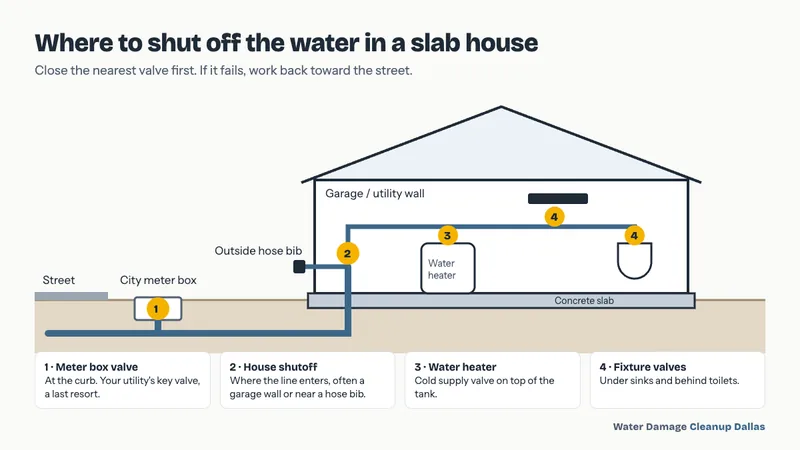
- Turn the cold water supply valve above the tank to closed. If it is stuck, close the main shutoff for the house.
- Switch off an electric heater at the breaker, but only if the panel is dry and you do not have to stand in water to reach it.
- Set a gas heater's control to off. If you smell gas, go outside and call 911 or the gas utility from there.
- Take photos of the tank, its rating label, the puddle and any wet ceilings before anything is moved.
- Call a plumber to decide between repair and replacement.
- Call a restoration provider to extract water and dry what got wet.
Our water removal page describes how standing water is pulled out. If water has already reached a ceiling, read the ceiling water damage repair guide before you touch the drywall.
Where is the water coming from, and who fixes it?
The spot where water appears is the best clue to the cause, and the cause decides who you call. Fittings and valves are usually a plumber's quick fix, while a wet tank shell usually means replacement. The table pairs each sign with a likely cause.
| Where you see water | Possible cause | Safe first look | Who to call |
|---|---|---|---|
| Top of the tank, around the pipes | A loose or worn supply or outlet fitting | Close the supply valve and see if the dripping stops | Plumber |
| Along the bottom or down the tank wall | A rusted-through or cracked tank | Look for rust trails and a steady seep from the shell | Plumber, often for a new tank |
| Discharge pipe from the relief valve | Valve opening under pressure or heat, or a worn valve | Note when it drips and whether the burner or element is running | Plumber |
| Drain valve near the floor | A loose, worn or partly open drain valve | Check that the handle is closed all the way | Plumber |
| Puddle with a dry tank | A nearby line, the AC drain or an appliance | Follow the water back to its highest wet point | Plumber or AC technician |
A tank that leaks through its shell has usually worn out, and fixing it is rarely practical. Ask the plumber to name the cause in plain words so you know whether you are replacing a fitting or the whole unit.
What happens when an attic water heater leaks into the ceiling?
Water spreads along framing and insulation before it shows, so the stain below may be far from the tank. Shut off the water and power, then protect the room underneath. Stay out from under any ceiling that sags or bulges.
A full tank holds a lot of water. In an attic it can soak insulation and drywall long before anyone notices a stain. If your heater is in the attic, learn where its shutoff is while everything is dry.
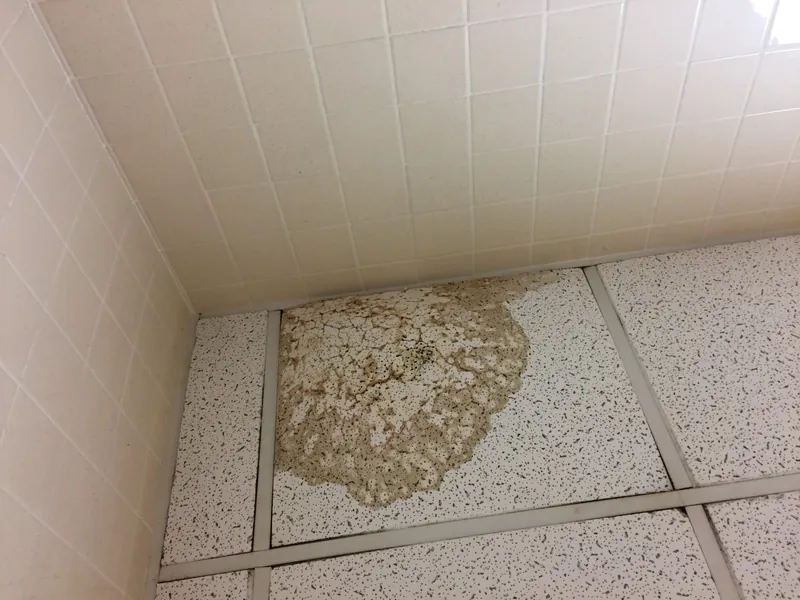
A sagging ceiling needs careful relief, which the ceiling page explains. Before blaming the tank, check the air handler too, since the AC leak water damage page shows how its drain line can wet an attic ceiling. Write down what you shut off and when, because a slow leak and a sudden failure leave different evidence and an adjuster will ask which it was.
What if the leaking heater is in the garage?
A garage tank leaks onto hard flooring, so the water travels to walls, stored boxes and any room that shares the slab. It can slip under a door into a hall or utility room, so check beyond the garage as well.
Lift stored items off the wet floor, and wear shoes. Concrete soaks up little, but drywall at the bottom of a wall draws water upward fast, and cardboard turns to pulp.
A heater in an interior closet is a third case. Water there goes straight into the floor and walls around it. For wet wood, laminate or tile, the water-damaged floor repair page explains what can be kept.
Wherever the tank sits, a drip at its base is a warning. Do not wait for it to get worse.
Can a drain pan or a leak sensor limit the damage?
A shallow pan holds a slow drip, and one connected to a drain line can send that water outdoors. A sensor sounds an alert early. Neither can contain a whole tank that ruptures, so think of both as early warning only.
A pan only helps if it is clear and its drain line is open. Scale, lint and dust can plug it, and a pan with no drain line fills up and spills over the edge. A plumber can tell you whether yours is set up correctly.
- Look in the pan for pooled water, flakes of rust or white scale each time you pass.
- Trace the drain line and confirm it ends where water will do no harm.
- Keep paper and cardboard out of the pan.
- Place a battery sensor in the pan or on the floor beside the tank, so a phone or alarm tells you about a leak.
The appliance leak page covers washers, dishwashers and other sources, and how sensors fit in.
Why does the relief valve keep dripping?
The temperature and pressure relief valve is a safety device that opens when pressure or heat climbs too high, and it sends water down a discharge pipe. A brief release can be normal. A steady drip points to excess pressure, a worn valve or a heater running too hot.
Never cap, plug or tighten the discharge pipe. That defeats the one part built to prevent a tank rupture.
- Keep children and pets back from hot discharge water.
- Note whether the dripping starts when the heater cycles on.
- Leave the discharge pipe open and pointed down.
- Ask a plumber to test the valve and the water pressure in the house.
If the discharge has wet a floor or wall, treat it as a leak and begin drying. The water mitigation page shows what the first stage of a job involves.
Will insurance pay for what a leaking tank damaged?
It may pay for the water damage the leak caused, but the worn-out heater itself is commonly your own cost to replace. Triple-I explains that standard forms list accidental discharge or overflow from plumbing, heating and household appliances, while damage from poor maintenance is not covered.
The NAIC notes that water damage from a home's plumbing is typically covered, whereas ground water and rain runoff are not. A tank that wore out slowly may be judged differently from one that burst suddenly, so ask the insurer how it will classify yours.
Wet drywall, flooring and insulation are the items a claim may pay for. Keep photos of the label and the failure, and keep the tank itself if you can until the adjuster has looked.
For context, Triple-I's industry data shows roughly one insured home in 60 filing a water damage or freezing claim each year. Read the water damage insurance claims guide for the process.
What claim deadlines apply in Texas after a tank leak?
Contact your insurer quickly, take sensible steps against further damage, and wait on any permanent repairs until the adjuster has looked at the loss in person. Triple-I adds that receipts should be saved and ruined belongings kept until the adjuster has inspected them.
The Texas Department of Insurance describes the timeline. Its steps start with 15 business days for the company to acknowledge the claim. After it has the documents it asked for, it gets another 15 business days to accept or reject. A rejection must include the reason in writing.
The same TDI page says a company may extend its decision by 45 days if it explains why it needs more time, and that after agreeing to pay it has five business days to do so. Keep a log of every call, and keep invoices for the plumber, the new tank and the drying.
Is the water from a leaking heater dirty, and how is the area dried?
Water from a tank or its supply lines normally counts as Category 1, clean water, under the IICRC S500 scheme. Contact with dirty materials or time can lower the category, so the provider confirms it on site before any drying plan is made.
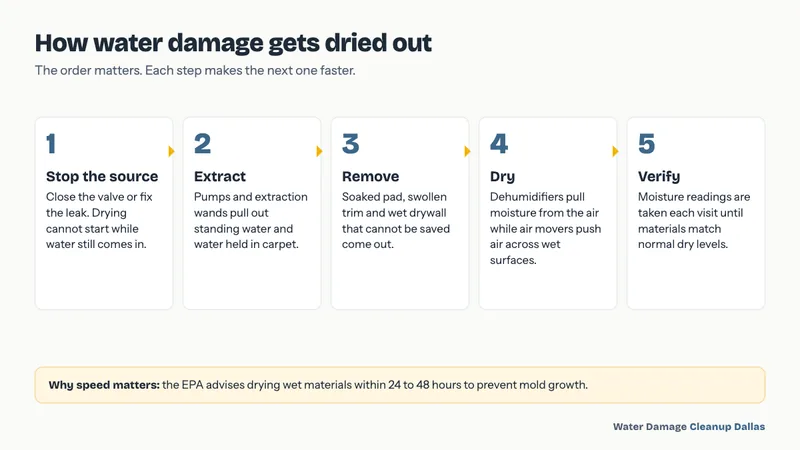
- Stop the source and pull out standing water.
- Take out what cannot be saved, such as soaked attic insulation or swollen drywall.
- Dry with air movers and dehumidifiers.
- Record readings at each visit to show progress.
- Repair and rebuild once materials read dry.
To keep mold from taking hold, the EPA wants wet areas and belongings dry in the first 24 to 48 hours. Structural drying explains the equipment, and mold after water damage covers areas that stayed damp. The CDC says soaked carpets that cannot be dried quickly should go. Each provider sets its own scope, so ask the one you reach what is included.
How do I keep a water heater from failing?
Look it over often and retire an old tank before it fails. Watch for rust, dampness at the base and a relief valve that drips, and keep the area around it clear and well lit. In North Texas, guard against hard freezes as well.
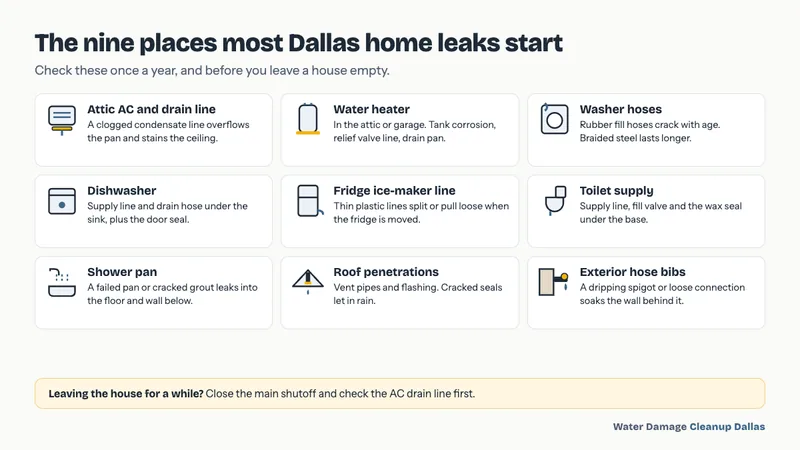
- Know where the cold supply valve is and test that it turns.
- Peek at the tank, pipes and pan on every trip into the attic or garage.
- Have a plumber advise on tank flushing and a relief valve test.
- Put a leak sensor or an automatic shutoff valve where the tank sits above living space.
- Plan a replacement for an aging tank.
The American Red Cross lists attics and garages among the places where supply pipes are most at risk of freezing. The National Weather Service recorded 139 consecutive hours at or below freezing at DFW Airport in February 2021, and the frozen pipe prevention guide covers what to do before the next one.
The water damage prevention guide adds a full checklist. If the water came from a split line and not the tank, see burst pipe water damage, and if the leak is under the floor, see slab leak water damage.
Sources: EPA mold and moisture guide; CDC mold and health; TDI claim steps; IICRC S500 water categories; Red Cross frozen pipes; NWS February 2021 winter event; NAIC homeowners insurance; Triple-I coverage article; Triple-I claims article; Triple-I homeowners statistics.