The short version
For roof leak storm water damage in Dallas, keep people clear of the water, cut power to a wet room only if the panel is dry to reach, photograph everything and phone your insurer. A roofer closes the opening and a restoration provider dries what got wet. Drying should start fast.
What do I do right after a storm opens a leak in my roof?
Move people and valuables away from the water, then record what is happening before you start cleaning. Nobody can repair a roof in the middle of a storm, so the first job is limiting how much of the house gets wet. Stay off the roof and out of the attic while lightning or strong wind continues.
- Clear the area under the drip: move rugs, electronics and furniture, and keep children and pets away from the wet spot.
- Watch the electrics. Water dripping from a light, fan or outlet means switching off that room's breaker, but only if you can get to the panel without stepping in water.
- Catch the water with buckets and towels. A ceiling that bulges with trapped water needs the steps on the ceiling water damage page.
- Photograph and film the drips, stains and anything damaged, with the date and time on the first shot.
- Make the calls when everyone is safe: your insurer first, then a roofer. Add a restoration provider if insulation, walls or floors took on water.
When the weather clears, the emergency water damage restoration page explains how a drying job usually proceeds. Providers differ, so confirm directly what each one will do for your house.
Why does a Dallas storm leak into a roof that looked fine?
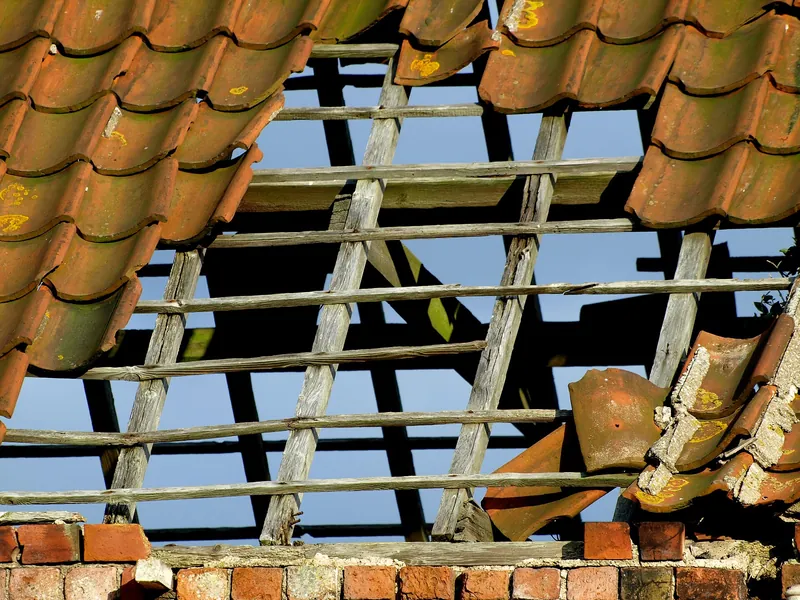
Storm weather attacks a roof in ways ordinary rain does not. Wind drives water sideways under shingles, hail bruises and cracks roofing, and a hard downpour finds weak spots at flashing and vent seals. A roof can look intact from the street and still let water through one failed joint.
Wikipedia describes Dallas as sitting at the lower end of Tornado Alley and says each spring brings severe thunderstorms with torrents of rain and hail. The National Weather Service lists 46.5 days a year with thunderstorms at DFW Airport, using a 76-year record, and a normal annual rainfall of 37.01 inches. May is the wettest normal month at 4.78 inches.
That pattern matters for repairs. A roof that has lost a few shingles in a storm may leak only when the wind comes from one direction, which makes the problem look random. The hail side of the story has its own page: see hail storm roof leaks in Dallas.
How can I tell where the water is getting in?
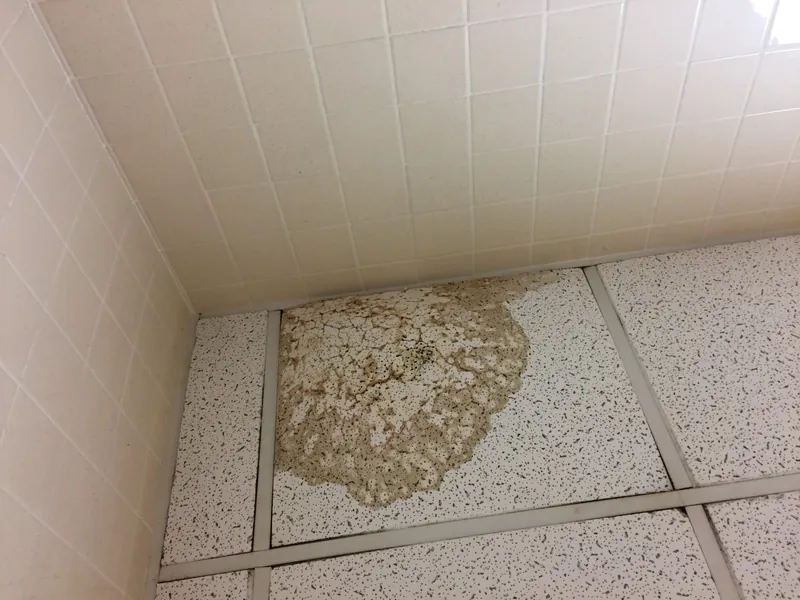
Start with the stain and work upward, because water rarely drips straight below the opening. It runs along roof decking and rafters, then drops where it finds a gap. The table lists common signs, the usual entry points and a safe first check for each one.
| What you see | Common entry point | First check |
|---|---|---|
| Brown stain on a ceiling under the attic | Lifted or cracked shingles, exposed nails, damaged vent seals | Look for dark wood or wet insulation from the attic hatch, only if it is safe |
| Stain beside a chimney or where a wall meets the roof | Failed metal flashing | Look at the metal strip along the joint from the ground or a window |
| Drip at a bath fan or recessed light | Loose duct or a damaged roof vent cap | Check whether the duct is still attached in the attic |
| Wet window frame during wind-driven rain | Worn caulk or a failed window seal, not the roof | Look at the outside trim and caulk line |
| Stain along an upper outside wall | Gutter overflow or edge flashing | See the gutters and downspouts page |
If you cannot find the entry point safely, do not climb up to look. A roofer can inspect it and tell you what failed, and a written note from the roofer also helps your claim.
How fast does the wet area have to dry?
Quickly, and sooner than most people expect. The EPA sets a target of 24 to 48 hours for drying wet areas and belongings, because mold gets its start after that. Insulation, ceiling drywall and framing hold water long after the rain stops, and a stained ceiling is often just the visible part.
North Texas air does not always help. The National Weather Service gives DFW Airport a normal annual relative humidity of 66 percent, and 82 percent at 6 am on average. The EPA wants indoor humidity under 60 percent, with 30 to 50 percent as the ideal range.
Wet attic insulation is the usual surprise. It can sag, hold water against the ceiling below and keep the drywall damp for days.
A restoration provider can measure moisture with a meter, pull out what cannot dry and set drying equipment. The structural drying page covers that process, and drywall water damage repair covers what happens to a wet ceiling or wall.
Does homeowners insurance cover a storm roof leak?
Often, when the water came through a storm opening in the roof. The NAIC consumer page separates a roof leak, which a policy typically pays for, from ground water and rain runoff, which it does not. Your own policy wording decides, so read it and put your questions to the agent in writing.
Triple-I points out limits. Standard homeowners policies leave out flood, and they skip damage from poor upkeep, so a worn roof can start an argument over whether the storm or age let the water in. The NAIC adds that mold costs are often excluded.
- Limit further damage: Triple-I says to take sensible steps, such as a temporary cover, and to keep what you spend on them.
- Hold permanent repairs until the adjuster has looked, and keep damaged material until then if asked.
- Collect written bids itemized by material and price, which Triple-I suggests.
- Know the deadlines: TDI lists 15 business days for the company to confirm it received the claim, then another 15 business days after it has what it asked for to give a decision. An explained delay can add 45 days, and a weather catastrophe can add 15 more.
A denial must come with written reasons, and TDI runs a complaint page if you disagree. The water damage insurance claims page walks through the full process.
What should I photograph and keep after a storm leak?
Keep proof of the storm, the opening and every wet surface. An adjuster compares your record against the roof and the weather report, and a clear record shortens arguments later. Collect it before cleanup changes the scene, and store copies somewhere other than the phone you used.
- The ceiling and walls: wide shots first, then close-ups of stains with a coin or tape measure for scale.
- The roof from the ground: missing shingles, lifted edges and debris, shot from the yard or the street.
- Wet belongings: a list of what was damaged, with photos, before anything goes in the trash.
- The weather: a screenshot of the storm alert or a note of the date and time the leak began.
- Every receipt for tarps, buckets, rentals, hotel stays and repairs.
Triple-I tells policyholders not to discard damaged items before the adjuster visits. If something has to go for health reasons, photograph it first and tell the adjuster why.
Who fixes what: roofer, plumber or restoration provider?
Each trade handles a different part of the problem, and a storm leak usually needs more than one. A roofer closes the opening, a restoration provider dries the house and removes wet materials, and a general contractor rebuilds whatever was taken out.
This site is a referral service, not a contractor, and does not do this work itself.
| Who | Usually handles | Ask them |
|---|---|---|
| Roofer | Finds the opening, covers it, repairs or replaces roofing | What failed, and can I have it in writing? |
| Restoration provider | Moisture readings, water removal, drying, removal of wet materials | What readings will you take and share? |
| Electrician | Checks wiring and fixtures that got wet | Is it safe to restore power to that room? |
| General contractor | Rebuilds ceilings, walls, insulation and paint | Will you wait for the drying to finish? |
Providers and contractors set their own services, so confirm directly who does what before you agree. The guide to choosing a restoration company lists questions to ask.
How do I keep water out until the roof is repaired?
Ask a roofer for a temporary cover over the opening, and keep every receipt. A tarp or temporary patch buys time between the storm and the permanent repair, and it shows your insurer that you limited the damage. Do not attempt it yourself on a wet or windy roof.
After a widespread storm, many homeowners need roofers at the same time, so expect waits and do not assume any one company can come quickly. Be wary of anyone who asks for payment before work or pressures you to sign on the spot. Read any form before signing, and see what to know about a work authorization before signing.
Inside the house, keep drying going while you wait. Open doors to the wet room, run a fan if the ceiling is not wet above it and use a dehumidifier if you have one. Move wet contents out and keep them for the adjuster.
What can I do before the next Dallas storm?
Inspect the roof and drainage while the weather is calm. Small repairs cost less than a ceiling, and the points that fail in storms are well known: loose shingles, dried-out sealant around vents, bent flashing and gutters packed with debris. A roofer can look at all of them in a single visit.
The NWS normals for DFW Airport show 10.9 days a year with at least 1.00 inch of rain, so a roof sees hard rain several times a year even without a major storm. Clean gutters so water leaves the roof edge, trim branches that scrape or drop limbs on shingles, and know where your water shutoff and breaker panel are before you need them. The prevention guide has a longer checklist.
When should I call a restoration provider after a storm?
Call once insulation, drywall, flooring or belongings are wet, or when a ceiling bulges or sags. Damp materials invite mold, and the EPA's two-day target is hard to hit if you wait for the roof repair to finish first. The two jobs can run side by side.
A small, dry-able spill on a hard floor may not need a provider. Wet attic insulation, a stained or soft ceiling, or water that ran down inside a wall does.
For mold, the EPA treats a patch under about 10 square feet as something most people can clean themselves, and TDLR notes that visible mold under 25 contiguous square feet can usually be cleaned without a license. Bigger patches are a different job, covered in mold after water damage.
The CDC likewise urges a quick dry-out and says soaked carpet and upholstery that cannot dry right away should go. For big jobs the water removal page describes the first stage.
Sources: NWS Fort Worth/Dallas, DFW records and normals (thunderstorm days, rainfall, rain days, humidity); Wikipedia, Dallas (Tornado Alley, spring storms); EPA mold and moisture guide; NAIC consumer page on home insurance; Triple-I on covered disasters; Triple-I on settling claims; TDI claim steps; TDLR, Mold assessors and remediators FAQ; CDC mold and health page.