For Allen, Wylie and Lavon homeowners
With water damage restoration in Allen, TX, the first moves are closing the water valve, taking photos and starting to dry within 24 to 48 hours. Standard homeowners policies leave out flood water. Requests are taken for Allen, Wylie and Lavon addresses.
Which Allen and Wylie addresses do you take requests from?
For water damage restoration in Allen, TX, requests come in from ZIP codes 75002 and 75013. For Wylie the home ZIP is 75098, and Lavon is covered through 75166. Providers set their own driving ranges, so ask whoever calls you back whether your street is inside theirs.
These towns run along the north side of the metro, so a neighbor page may match your address better. Read about Plano to the west, McKinney to the north, or Frisco, Prosper and Celina to the northwest.
How did Allen and Wylie grow, and what does that mean for your plumbing?
Both towns began as railroad stops and then grew very quickly, so houses on one street can come from different decades. Wikipedia says Allen was founded in 1870 and named in 1872, and that it grew from 1,940 residents in 1970 to 18,309 in 1990.
Wylie's article says its businesses moved to the Gulf, Colorado and Santa Fe tracks in 1886 and 1887, and the city was incorporated in 1887. It grew 173.8 percent between the 2000 and 2010 censuses.
| 2020 Census figure | Allen | Wylie | Why it matters |
|---|---|---|---|
| Residents | 104,627 | 57,526 | Allen is the larger city |
| Households | 35,491 | 17,957 | Each one has its own plumbing and roof |
| Housing units | 36,962 | 18,507 | Vacant units can leak unnoticed |
| Total area | 26.48 sq mi | 35.317 sq mi | Wylie's total includes a lot of lake |
Allen's older streets sit near the original townsite, where the railroad built a water supply stop on Cottonwood Creek by 1876. Blocks built decades later in the fast-growth years sit farther out. A house in the old core and a house from the building boom can have very different pipes, roofs and drainage. Ask when your own was built.
Rapid building means a mix of pipe materials, roof ages and water heater locations. Ask your plumber what is in your walls, and find out when your house was built before you assume anything about it.
Do homes in Allen and Wylie flood?
Wikipedia does not describe flooded homes in either city, so this page makes no claim about your street. It does describe the ground: Allen sits on the Northern Blackland Prairie, where the soil is mostly clay and absorbs water slowly, and Rowlett Creek flows through town toward Lake Ray Hubbard.
Cottonwood Creek runs through Allen's original townsite in the same watershed. Slow-draining clay means heavy rain can sit on a lawn and push toward a foundation, so check how water leaves your yard and where downspouts end.
Wylie is covered in the next section. Whatever the source, water that enters from outside is Category 3 under IICRC S500, and FEMA notes that most homeowners insurance leaves out flood losses. The flood zone map guide shows how to look up an address.

What should Wylie homeowners know about the lakes and Lavon Dam?
Wylie is wrapped by water. Wikipedia says 40.43 percent of its total area is water and that it sits between Lavon Lake and Lake Ray Hubbard. The Lavon Dam and Reservoir lie 5 miles north of town, and the North Texas Municipal Water District keeps its offices in Wylie.
Being near a lake does not tell you your flood risk, and being far from one does not either. Look up your own address, and ask your agent how your policy treats water that comes from outside.
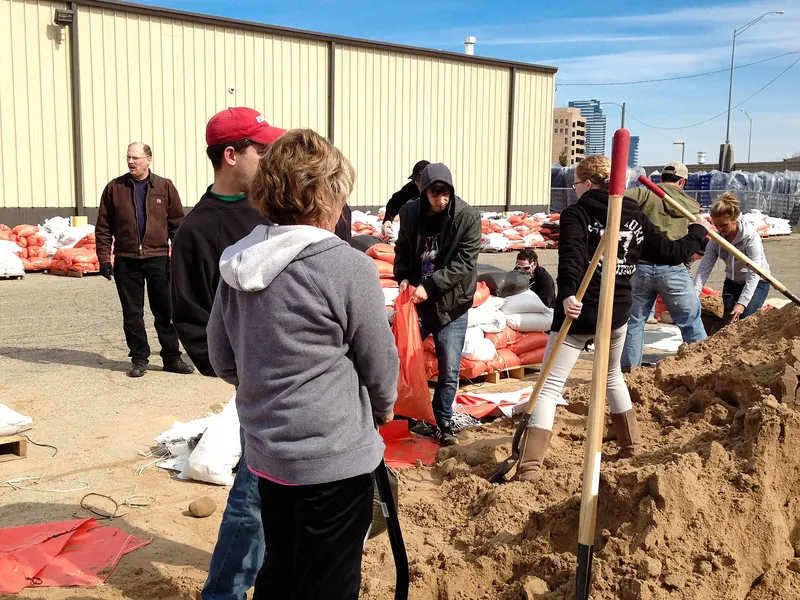
Driving matters during a storm. Ready.gov warns that moving water only six inches deep can push a person off their feet, and a foot of it can carry a vehicle off, so skip any flooded road. If water is already in the garage, stay out of it until the power to that area is off.
What did the April 2016 hail storm do to Wylie roofs?
It reached most of the town in a single afternoon. The National Weather Service says 80 percent of Wylie homes were affected by the supercell of April 11, 2016. Wikipedia reports the same share and says the storm brought softball-sized hailstones.
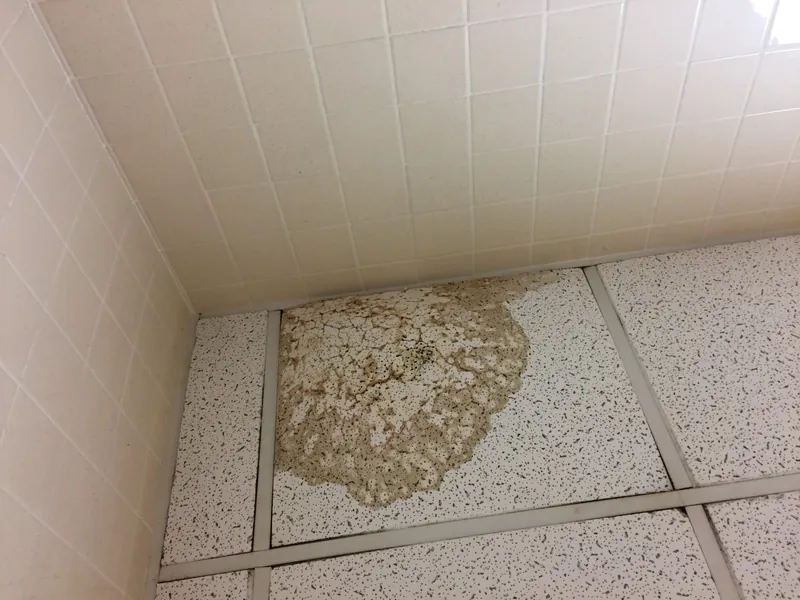
Roof damage from a storm like that can stay hidden. Granules wash off shingles, seals crack and the first sign may be a ceiling stain after a later rain, months afterward. Photograph your roof and attic after any large-hail storm and keep the pictures. Dated images matter more than memory.
- Check the attic deck for daylight, dark streaks or damp insulation.
- Look at ceilings under vents and chimneys after the next rain.
- Keep any contractor's inspection photos and written notes with your claim.
Do not wait for a leak to prove the damage. A roofer's inspection date and a set of dated photos give you something solid to show an adjuster later.
Triple-I says Texas ranked first with 902 major hail events in 2025. Read hail and hidden roof leaks and roof leaks after storms for what to do next.
Can a tornado or high wind lead to a water damage claim?
Yes, because wind opens the roof first and rain follows. Wikipedia says an EF1 tornado hit Allen on the night of April 9 to 10, 2008. About 50 homes were structurally damaged, about 300 reported some damage, and insured losses in the city approached $5 million.
An EF0 tornado crossed west Allen and US 75 on October 21, 2019, and tore shingles from houses. Wylie's downtown was hit by a tornado on Mother's Day, May 9, 1993.
Torn shingles and loose flashing let water into the attic before anyone looks up. After wind, check ceilings for fresh stains and the attic for wet insulation, then cover openings with tarps if you can do it safely. Keep receipts for emergency covering and read how claims work before you sign for repairs.
Does a newer, higher-value home change the cleanup?
It can, because finishes cost more to replace. Wikipedia reports a median owner-occupied home value of $464,100 in Allen, from the 2020 to 2024 American Community Survey. It also says 69.8 percent of occupied housing units in Allen were owner-occupied in 2020.
Hardwood, engineered flooring, built-in cabinets and stone counters respond to water differently. Some can be dried in place, while others cup or delaminate, so ask the provider what they plan to test before anything is torn out.
Tell your insurer about higher-end finishes early, and photograph them. The floor repair guide and contents cleaning and pack-out page explain how floors and belongings are handled.
Can a freeze split pipes in an Allen or Wylie house?
It can, and the February 2021 storm showed how long a freeze can last. The NWS says DFW Airport stayed at or below freezing for 139 consecutive hours, from 5 pm on February 13 to noon on February 19. The airport's low was -2 F on February 16.
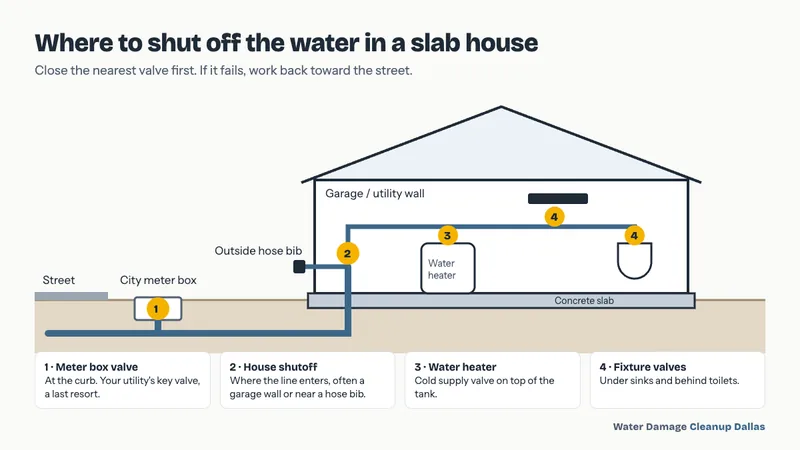
Know your main shutoff before the next one. If a pipe is already frozen, the American Red Cross lists safe ways to thaw it: an electric heating pad, a hair dryer, a portable space heater placed away from flammables, or towels soaked in hot water.
It also rules out a blowtorch, kerosene or propane heater, charcoal stove and every other open flame. Leave the faucet open as you work, and watch for a leak as the pipe warms. The frozen pipe prevention guide and burst pipe guide have the full steps.
How does a claim work after a storm or leak?
Start with a call to your insurer, then protect the property. Triple-I advises reasonable steps to stop more damage, with major permanent repairs on hold until the adjuster has looked. Keep receipts, photograph the damage, and leave damaged items in place until the adjuster visits.
The Texas Department of Insurance says the company must tell you in writing why it rejects a claim, and it sets deadlines for acknowledging and deciding one. TDI can extend those deadlines after a weather-related catastrophe, which matters after a big hail storm.
If you disagree with a settlement, Triple-I says many policies allow an independent appraisal. It also advises getting written bids from licensed contractors with line-by-line prices. The CLUE report guide covers how past claims follow a house.
What are the first moves in the first 24 to 48 hours?
Stop the source and begin drying, because mold risk builds quickly. After a flood the CDC wants the home cleaned and dried completely and fast, inside 24 to 48 hours, with soaked carpet and upholstery removed if it cannot be dried right away.
- Turn off the water at the main valve, and power to the wet area if that is safe.
- Take photos and video of the damage and of the roof, ceiling or pipe that caused it.
- Call your insurer, then ask a restoration provider about moisture readings and drying records.
- Move small items to a dry room and lift furniture legs off wet flooring.
- Keep windows open only if the air outside is drier than inside.
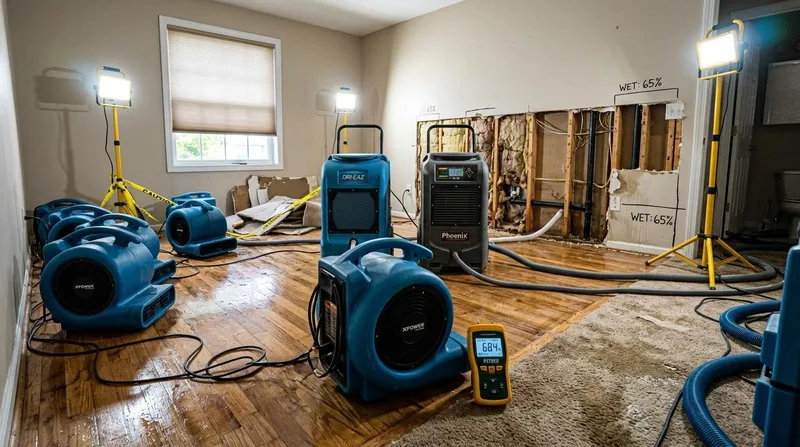
The emergency page has a fuller checklist, and structural drying explains how wet walls and floors are dried. Mold after water damage covers growth that has already started.
Sources: Allen, Texas and Wylie, Texas (Wikipedia, citing the 2020 Census); NWS Fort Worth/Dallas, April 11, 2016 hail storm; NWS, February 2021 winter event; Triple-I, hail; Triple-I, settling claims after a disaster; Texas Department of Insurance, getting your claim paid; FEMA, flood insurance; IICRC S500; CDC, About Mold and Your Health; Ready.gov, floods; American Red Cross, frozen pipes.