The short version
Gutters water damage happens when a clogged gutter or short downspout sends roof water to the fascia, siding and foundation soil instead of away from the house. Watch a rain, clear blockages, point downspouts away from the wall and dry any wet materials. Insurers often treat overflow as a maintenance issue.
How do clogged gutters cause water damage?
A clogged gutter stops carrying water away, so the water goes wherever it can. It spills over the front edge onto the ground beside the house, backs up under the bottom row of shingles, or runs down the fascia and siding. Each route wets something that was built to stay dry.
The damage builds slowly because the water arrives only when it rains. Fascia boards and soffits stay damp, paint peels, wood softens and the edge of the roof deck starts to rot. Soil beside the house gets soaked in the same spot after every storm.
This page covers how overflow reaches a house, how to spot it early and who handles each part of the fix. A gutters water damage problem in Dallas is usually a maintenance problem first, and that matters for insurance too, covered further down.
Where does overflowing gutter water end up?
It ends up at the roof edge, on the wall below or in the ground against the house. Where the water lands decides what gets damaged and what the first sign looks like. The table follows the common paths from a blocked gutter to the damage they cause.
| Where the water goes | What it can damage | Early sign |
|---|---|---|
| Backs up under the lowest shingles | Roof deck edge, fascia, soffit, attic insulation near the eave | Stain on an upstairs ceiling along an outside wall |
| Spills over the front lip | Siding, window trim, door thresholds, flower beds | Streaks and mud splash on the lower wall |
| Leaks at a seam or corner | One strip of siding and the wall behind it | Vertical stain or peeling paint under a joint |
| Pours out of a downspout at the wall | Soil and the edge of the foundation or slab | Pooling or a wet strip along the house after rain |
| Runs into a garage or door sill | Flooring, baseboards, stored items | Damp edge of the floor and a musty smell |
Water that comes inside after running down an outside wall is hard to trace. The signs of water damage guide lists clues to look for in rooms along exterior walls.
Why do Dallas storms overwhelm gutters?
Because North Texas rain often arrives in short, heavy bursts. The National Weather Service gives DFW Airport 37.01 inches of normal annual rainfall and 10.9 days a year with 1.00 inch or more. May is the wettest normal month at 4.78 inches, followed by October at 4.37 inches.
A gutter that handles a drizzle can fail in a downpour if one section is partly blocked. Wikipedia says spring brings severe thunderstorms to Dallas, with torrents of rain and hail. Hail adds a second problem: it can dent gutters, knock them loose from the fascia and strip granules off shingles that then wash into the trough.
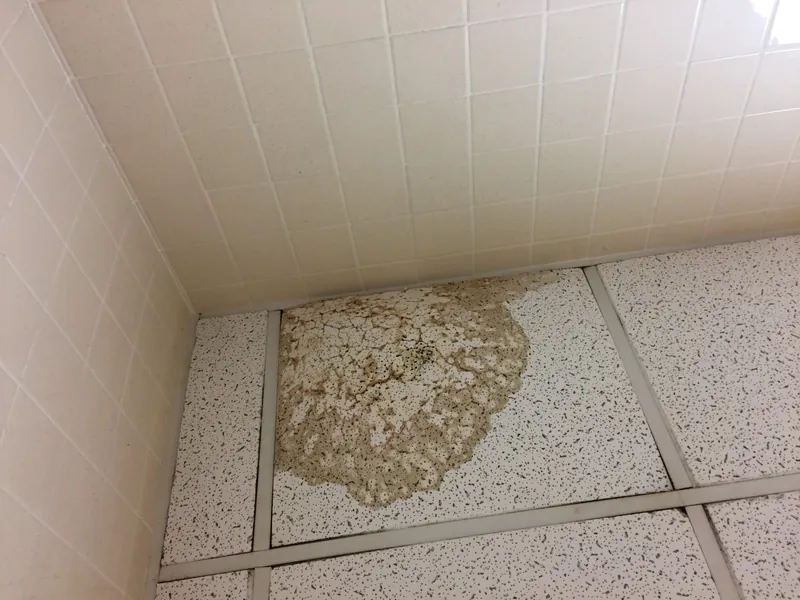
After a hailstorm, check the gutters as well as the roof. The hail storm roof leaks page covers what hail does to shingles and flashing, and roof leaks and storm water damage covers the first steps once water is inside.
What are the warning signs of gutter trouble?
Most signs show on the outside of the house after rain. Walk the perimeter during or just after a storm and watch where water goes. Sheets of water coming over the gutter edge, drips from seams and puddles beside the foundation all mean the system is not working.
- Water pouring over the front of the gutter instead of through the downspout.
- Plants growing in the gutter or visible debris, shingle grit and standing water.
- A sagging or pulled-away gutter with a gap at the fascia.
- Stains or peeling paint on fascia, soffits and the top of the siding.
- Soil washed away or pooled water below a downspout.
- Ceiling stains or a musty smell in a room along an outside wall.
None of these proves that the gutter caused a stain inside, because a roof leak looks similar. A roofer or gutter contractor can tell the difference, and a moisture reading can show how far water traveled.
Where should downspouts send the water?
Away from the house, onto ground that slopes away from it. A downspout that empties at the wall puts a stream of water against the foundation each time it rains. Extensions, splash blocks or buried drain lines move the water out into the yard, and the right choice depends on the lot.
In a slab house, water that collects at the edge of the slab can soak the soil under and beside it.
Dallas Water Utilities names dry expansive soil as a contributor to water main breaks, so soil that swings between dry and wet is something local crews already deal with. A foundation specialist can say whether your lot has a drainage problem. This page does not diagnose foundation movement.
Check where the water goes after it leaves the downspout. Water should not run toward a neighbor's wall, pool against a garage door or flow across a walkway where it can freeze. NWS normals give DFW Airport 29.2 days a year at or below 32 F, so winter ice is a real risk on paths.
How do I check my gutters safely?
Do it from the ground first, and use a ladder only on dry, level footing with someone nearby. A fall is a far worse outcome than a clogged gutter. If the gutters are high, hire a gutter or roofing contractor to clear and inspect them instead of climbing.
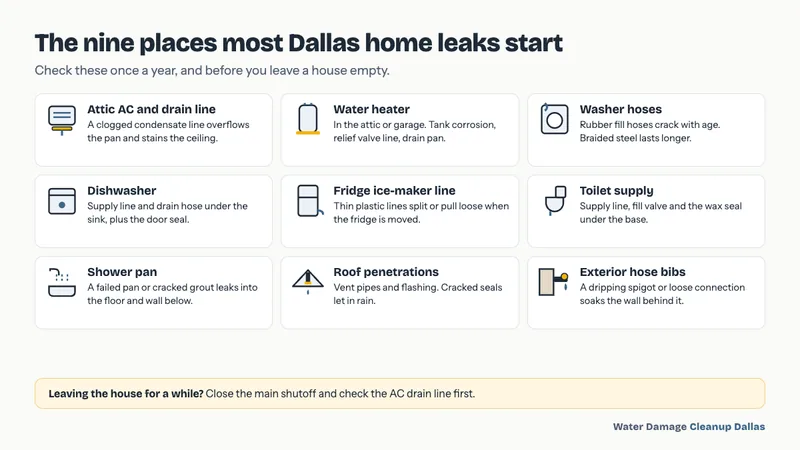
- Watch a rain. Stand safely under cover and see where water leaves the gutters.
- Look from the ground for sagging runs, gaps, loose brackets and stains below seams.
- Check each downspout for blockage by running a hose into the gutter and watching the outlet.
- Inspect the soil at each outlet for pooling, mud splash or a trench cut by running water.
- Look inside along outside walls and in the attic edge for stains, damp insulation or a musty smell.
- Write down what you find with dated photos, and fix the cause before the next storm.
Clear gutters after leaves drop in autumn and after any hail or windstorm. The water damage prevention guide places gutters in a wider checklist, and the home inspection page explains what an inspector checks for moisture.
Does insurance pay for damage from clogged gutters?
Often not, because insurers tend to see it as a maintenance issue. The NAIC places ground water and rain runoff among the losses a policy typically skips, and Triple-I says upkeep failures are excluded. Water that spills from a blocked gutter and soaks the ground can land in either group.
The picture can change if the gutter fails because of a covered event, such as hail denting it or a fallen limb pulling it down. By contrast, the NAIC lists a leaking roof among the losses typically paid. Ask your agent in writing how your policy treats each case, and keep your maintenance records.
Triple-I advises taking sensible steps to stop further damage after a loss and saving receipts for what you spend. The Texas Department of Insurance says a company that denies a claim must explain in writing. See the water damage insurance claims guide for deadlines and the full process.
Can gutter overflow lead to rot and mold?
Yes, because it keeps wood and drywall wet. The EPA gives 24 to 48 hours as the window for drying wet materials, since mold needs moisture to grow. Repeated wetting at the roof edge or lower wall rarely gets a full dry-out, so rot and mold can form out of sight.
Look for soft wood, flaking paint and dark spots on fascia, trim and the ceiling corner nearest the wall. The EPA says indoor humidity should stay below 60 percent, ideally 30 to 50 percent, and the National Weather Service lists a normal annual relative humidity of 66 percent at DFW Airport.
For a patch under about 10 square feet, the EPA says most homeowners can do the cleaning, and the CDC lists soap and water, household cleaner or diluted bleach for hard surfaces, with a warning never to mix bleach and ammonia. Larger areas call for help; read mold after water damage first.
Who fixes what after gutter water damage?
Several trades share the job, and gutter overflow rarely belongs to just one. A gutter contractor or roofer fixes the cause, a restoration provider dries the wet materials, and a general contractor repairs fascia, siding or drywall afterward. This site is a referral service and does not do this work itself.
Call a restoration provider when drywall, insulation or flooring has gotten wet, or when a ceiling is stained and soft.
Ask what readings it takes, what it removes and what it documents for an insurer. Providers differ, so confirm directly. The water removal page explains the first stage, and structural drying explains how the dry-out is measured.
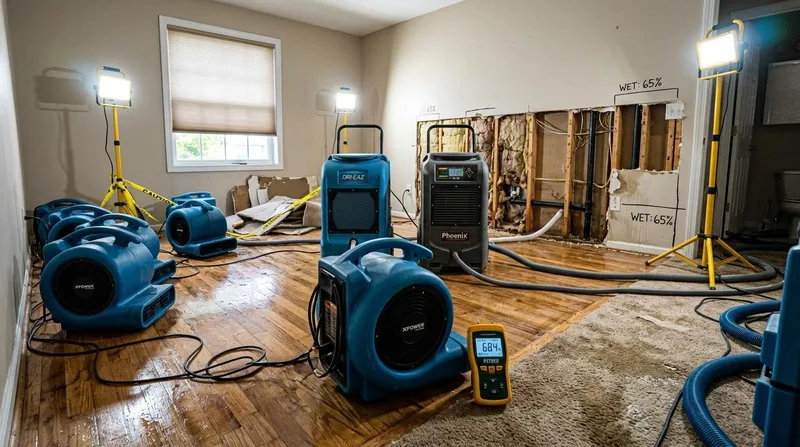
For help picking a company, see choosing a restoration company.
Sources: NWS Fort Worth/Dallas, DFW records and normals (rainfall, rain days, freezing days, humidity); Wikipedia, Dallas (spring thunderstorms and hail); Dallas Water Utilities, water main breaks and leaks (expansive soil); NAIC, Homeowners Insurance (runoff, roof leaks, mold); Triple-I, covered disasters (maintenance); Triple-I, settling claims; TDI, claim steps (written denial); EPA, mold and moisture; CDC, About Mold and Your Health.