The short version
Winter storm pipe damage in Dallas peaked in February 2021, when DFW Airport stayed at or below freezing for 139 straight hours, per the NWS. TDI counted 511,473 Texas insurance claims. Keep photos, receipts, the plumber report and the claim file, and dry wet areas within 24 to 48 hours.
What happened to Dallas pipes in the February 2021 winter storm?
A long, hard freeze split pipes across North Texas. The Texas Department of Insurance says most of the state had frigid cold, ice, sleet and snow from February 11 to 19, 2021, with temperatures below freezing until February 20 and long power outages. It lists freezing pipes among the damage.
Winter storm pipe damage in Dallas followed the same pattern as the rest of the state. Water froze in attic lines, exterior walls, garage supply lines and outdoor bibs, then the leaks showed up as the temperature rose. A leak in a wall or attic can run for a while before anyone sees it.
This page looks back at the event, the insurance record and what to keep for next time. For steps you can take before the cold, see how to keep pipes from freezing. If a pipe has split now, go to the burst pipe page.
How long did Dallas stay below freezing in February 2021?
The National Weather Service Fort Worth office counted 139 consecutive hours at or below freezing at DFW Airport, from 5 pm on February 13 to noon on February 19, 2021. An earlier stretch ran 93 hours, from 5 pm on February 9 to 2 pm on February 13. The cold came in two waves.
| Measure at DFW Airport | 2021 figure | Why it matters for pipes |
|---|---|---|
| First freezing stretch | 93 hours, February 9 to 13 | Pipes were already cold before the second wave |
| Second freezing stretch | 139 hours, February 13 to 19 | Long enough to freeze lines in attics and walls |
| Lowest temperature | -2 F on February 16 | Deep cold reaches pipes that most winters never touch |
| Event snowfall | 5.0 inches, February 14 to 17 | Added to a week of cold already in place |
The NWS says the February 15 high at DFW was below the record low for that date. It names the cause as a polar vortex that lingered over south central Canada for more than a week. By its normals, DFW sees only 1.6 inches of snow in an average year, so a 5.0-inch event stood out.
Why did so many pipes burst when the thaw came?
Water expands as it freezes and presses on the pipe, as the Red Cross explains. Ice blocks the line, pressure builds between the ice and a closed faucet, and the pipe gives way. The leak may only show once the ice melts and water flows.
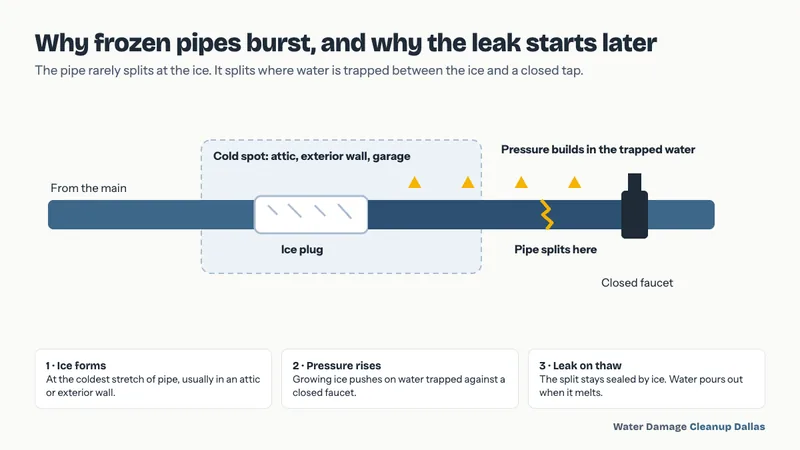
TDI notes that much of Texas went through sustained or rotating power outages during the event. A house with no heat gives pipes little protection, which is part of why the damage was so widespread. Homes with pipes in attics, garages and exterior walls were exposed first, as the Red Cross list of at-risk pipes describes.
- Attic lines: a split above the ceiling soaks insulation and drops water through the drywall.
- Exterior-wall lines: water pours down inside the wall cavity and out at the baseboard.
- Hidden lines: a leak you cannot see can run for days. See slab leak water damage for the under-floor case.
How many insurance claims did Winter Storm Uri produce?
TDI counted 511,473 insurance claims and about $11.5 billion in expected insured Texas losses as of June 30, 2022. Of that, about $8.8 billion had been paid and $1.8 billion sat in unpaid case reserves. The rest was an estimate for claims not yet reported, so the final total could differ.
For residential property policies, TDI puts the average incurred loss at about $17,800. These are statewide figures and include every cause of loss from the storm, not only pipes. They do not tell you what a Dallas house would cost, and no Dallas-only burst pipe count was available from the sources checked for this page.
The Insurance Information Institute adds a wider view. It reports that water damage and freezing made up 23.7% of homeowners insurance losses in 2021, against 19.8% in 2020 and 25.8% in 2022. Its average claim for the category was $15,400 across 2019 to 2023.
- Statewide scale: TDI counts claims from the whole state, not a single metro area.
- Averages hide spread: a small supply line leak and a flooded two-story house land at opposite ends.
- Mold can be in the totals: III says the category includes damage caused by mold, if covered.
How long did claims take to close after the storm?
TDI reports that the average time to close a residential claim after the storm was 61.4 days, based on data through June 30, 2022. That is a statewide average across all residential claims, so a single file could close much sooner or take far longer than that.
TDI also lists deadlines for any property claim: a company has about 15 days to acknowledge it, then 15 business days after it gets what it needs to say whether it will pay. It can extend that by 45 days if it explains why, and TDI can add 15 days after a weather catastrophe. Payment is due within five business days of agreeing to pay.
- Ask for the decision in writing. TDI says a company that rejects a claim must say why in writing.
- Keep a log of every call, with the date, name and what was said.
- If you disagree, TDI takes complaints. Its general questions line is 800-252-3439.
Does homeowners insurance cover winter storm pipe damage?
Often it does cover the resulting water damage. Triple-I lists freezing of plumbing, heating and air conditioning systems among the named perils on standard forms. It also says policies exclude damage from lack of maintenance, so how you prepared and what you did after the leak can matter.
The Triple-I claims guidance says to contact your agent or company immediately, take reasonable steps to protect the property, and hold off on major permanent repairs until the adjuster has assessed the damage. Policies differ in wording, deductibles and limits, so read yours.
- Homeowners: see the insurance claims guide for the full steps.
- Renters and condo owners: coverage depends on the lease, the master policy and your own policy. See apartment and condo water damage.
- Flood is different: a burst pipe is not a flood. Standard policies exclude flood, which FEMA says most homeowners insurance does not cover.
What water damage shows up after a freeze thaws?
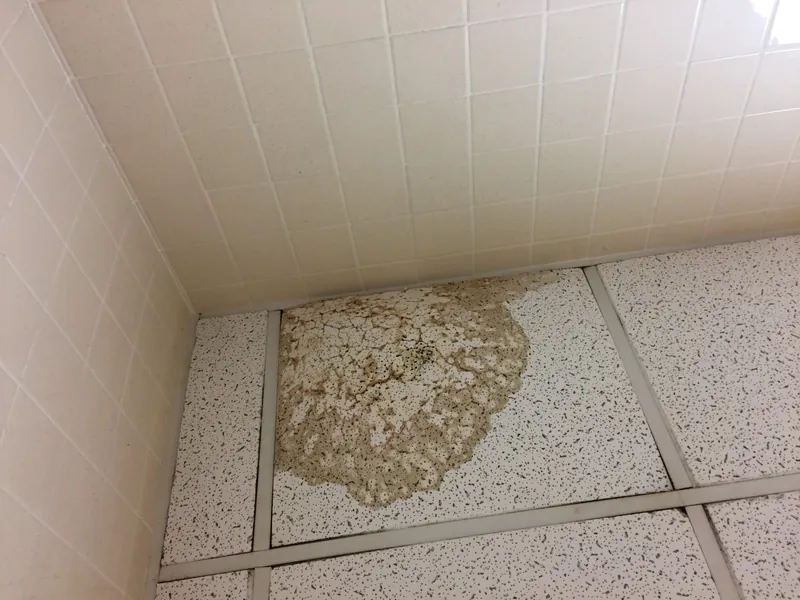
Wet insulation, soft drywall, swollen trim and flooring, and later a musty smell. The EPA says mold usually will not grow if damp materials dry within 24 to 48 hours, but a leak inside a wall or above a ceiling can sit unseen for days after a thaw. Check the places you cannot see.
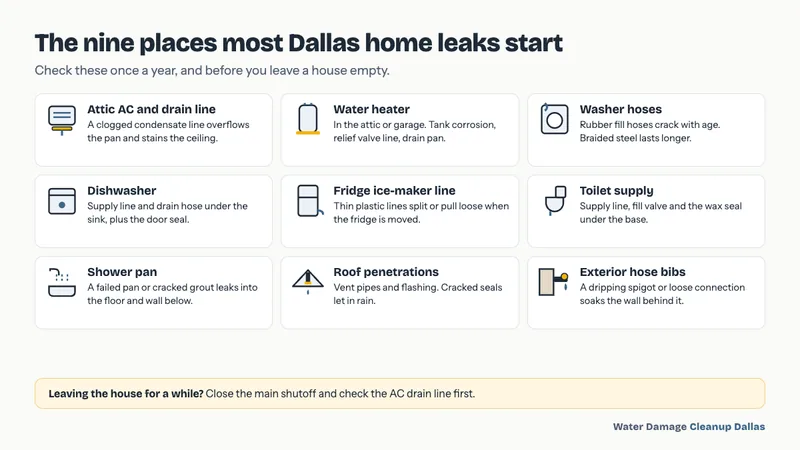
- Ceilings: stains, bulges and drips. See ceiling water damage repair.
- Walls: bubbling paint, soft baseboards, musty smells. See drywall water damage repair.
- Floors: cupping, buckling or a damp carpet pad. See wet carpet drying.
- Hose bibs and outside lines: splits outdoors can wet the foundation edge.
- Water bill: an unexplained jump can point to a hidden leak. Compare it with earlier bills.
The mold after water damage guide says when a hidden problem needs a professional.
What should I keep from a freeze loss for the next time?
Keep the paperwork and the plan. Photos, receipts, the plumber's report, written bids and the claim file all help if another freeze comes and you need to show what happened and what it cost. A shutoff map and a short prep checklist help you move faster the second time.
- Photos and video of the break, the water and each damaged room, dated if possible.
- The plumber's report with where the pipe split and what was replaced.
- Receipts for emergency work, equipment, hotels and supplies, which Triple-I says to save for reimbursement.
- Written bids that list materials and prices line by line.
- The claim file: dates, contacts, the adjuster's notes and the written decision.
- A drying record from any restoration provider, with readings from each visit.
Claims also leave a record that follows the house. The CLUE report page explains it. Ask providers what documents they give you, because they differ.
What would I do differently before the next hard freeze?
Do the checklist while the weather is mild: locate the main valve, insulate exposed lines, drain outdoor hoses, and plan heat for a power outage. The Red Cross advises a thermostat no lower than 55 F when away, and cold water dripping from faucets on exposed pipes.
DFW averages 29.2 days a year with a low at or below 32 F, per the NWS normals. A mild year does not make the next one safe.
- Know your valves: see preventing water damage and the shutoff guide on the burst pipe page.
- Check your policy before winter, not after.
- Choose a plumber before you need one, and write the number on the main valve tag.
For hiring, see the guide to choosing a restoration company and the work authorization page. This site is a referral service, so confirm each provider's terms directly.
Sources: NWS February 2021 winter event; NWS DFW normals; TDI Winter Storm Uri losses report; TDI claim steps; TDI complaint page; III homeowners facts; Triple-I covered perils; Triple-I claim settling; FEMA flood insurance FAQ; EPA mold and moisture guide; Red Cross frozen pipes page.